Visiting the 101st Airborne Museum in Bastogne, Belgium
Put the 101st Airborne Museum high on your list of places to visit for World War II history in Bastogne. Located in the heart of this small city in Belgium, this treasure of a museum offers an immersive and atmospheric experience. Exhibits focus on the role of the 101st Airborne Division during what is sometimes called the Battle of the Bulge.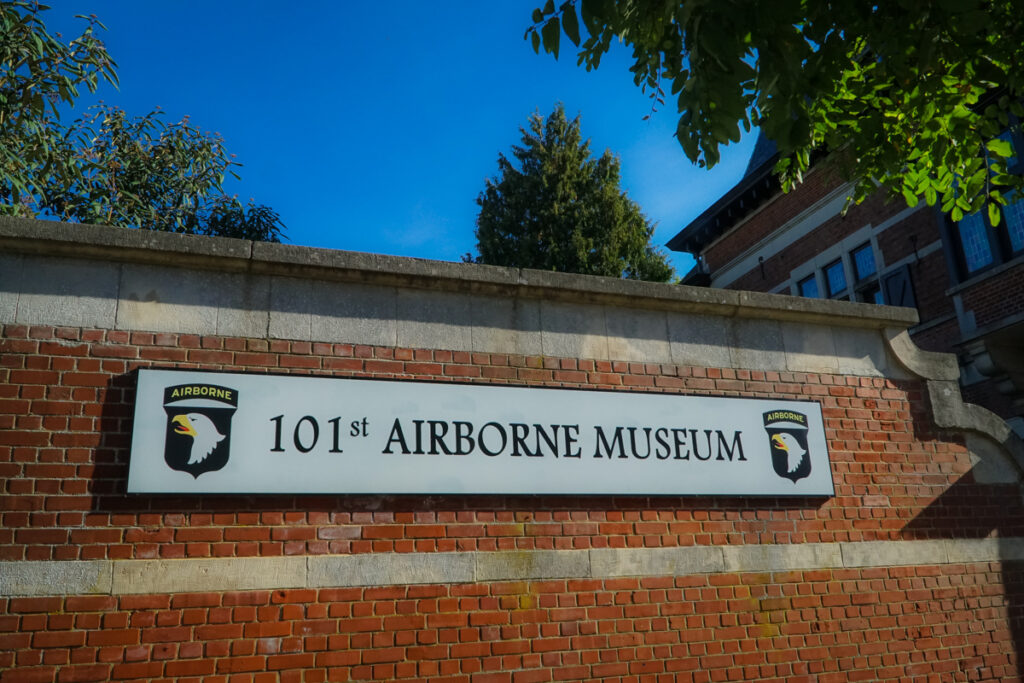

Hi there! This post may contain affiliate links. That means I earn a bit of money if you purchase products through me. This involves no extra cost to you and it helps me maintain this blog.
A short story of the siege of Bastogne in December 1944
Beginning December 16, 1944, Allies in Bastogne suffered under siege of the Germans who had crossed the border into the Ardennes region of Belgium and Luxembourg in a surprise attack. While this forested area was attacked along a front of many miles, the battle focused on Bastogne in December. This was due to Bastogne having seven roads in and out and being a crucial transportation hub.
The Allies, freezing and lacking supplies, hunkered down in their foxholes around the perimeter of Bastogne and held the line against all odds.
On December 26, General George Patton’s Third Army broke through and entered Bastogne. The weather improved, too, allowing for Allied air drops of desperately needed supplies. The siege of Bastogne were over. By mid-January, the Germans retreated back to Germany.
The 101st Airborne, most famously Easy Company, helped protect Bastogne from the onslaught of the Germans. And this museum honors them in particular as a lens through which the visitor can understand the bravery and sacrifice of the troops in the Battle of the Bulge.
Read more about the siege of Bastogne in 1944, written by the U.S. Army Airborne and Special Operations.
The setting of the museum in a historic building
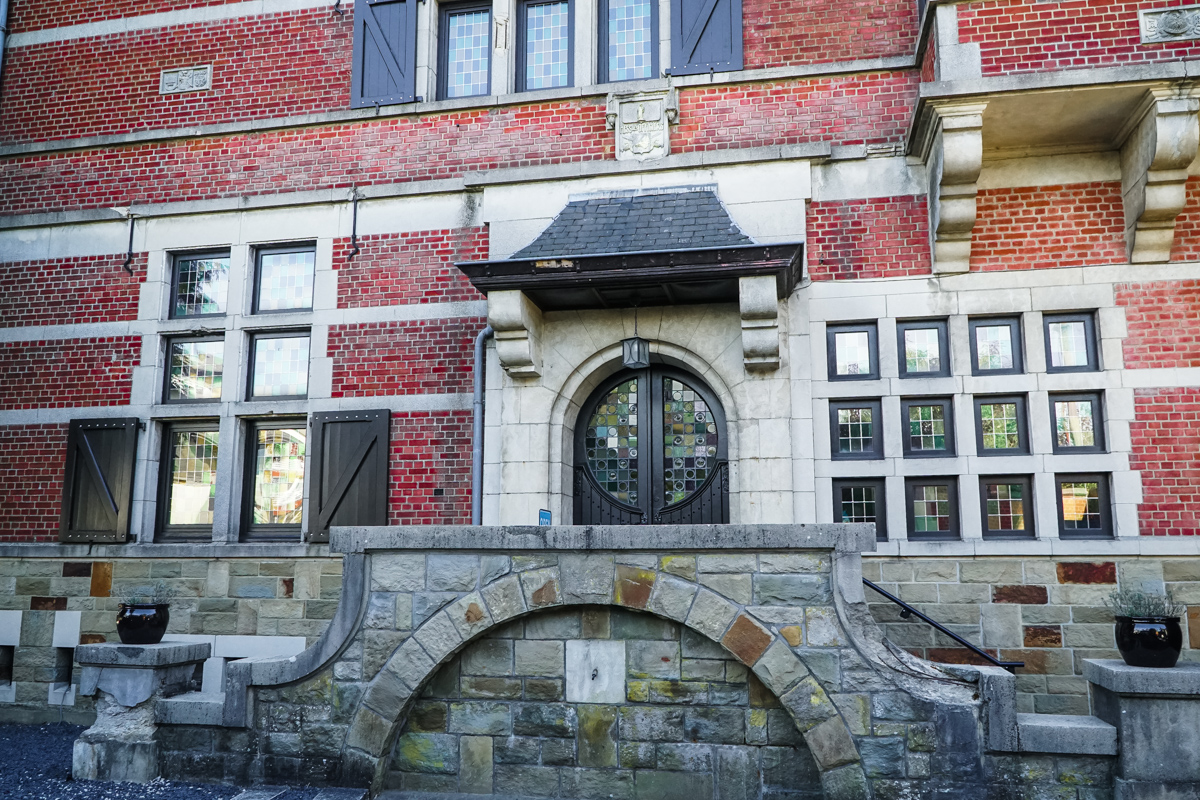
As you arrive, you will see that the museum is housed in a large building that served as German administration offices during the war. (The Germans occupied Bastogne through much of the war). As the museum’s historian showed my tour group, Adolf Hitler himself walked under this archway.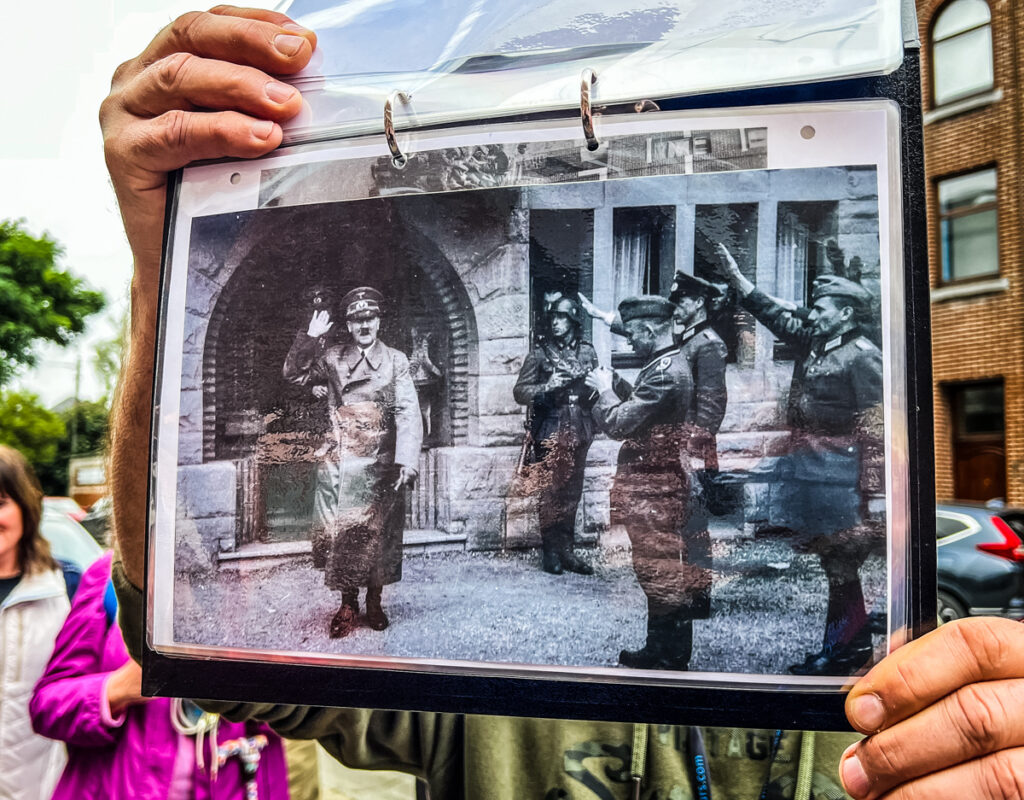

A mess (eating area) also occupied part of the building during wartime. And the Red Cross used this as a hospital.
So, when you walk in, you immediately feel you are in a warm and welcoming place, unlike many modern, more sterile museum settings.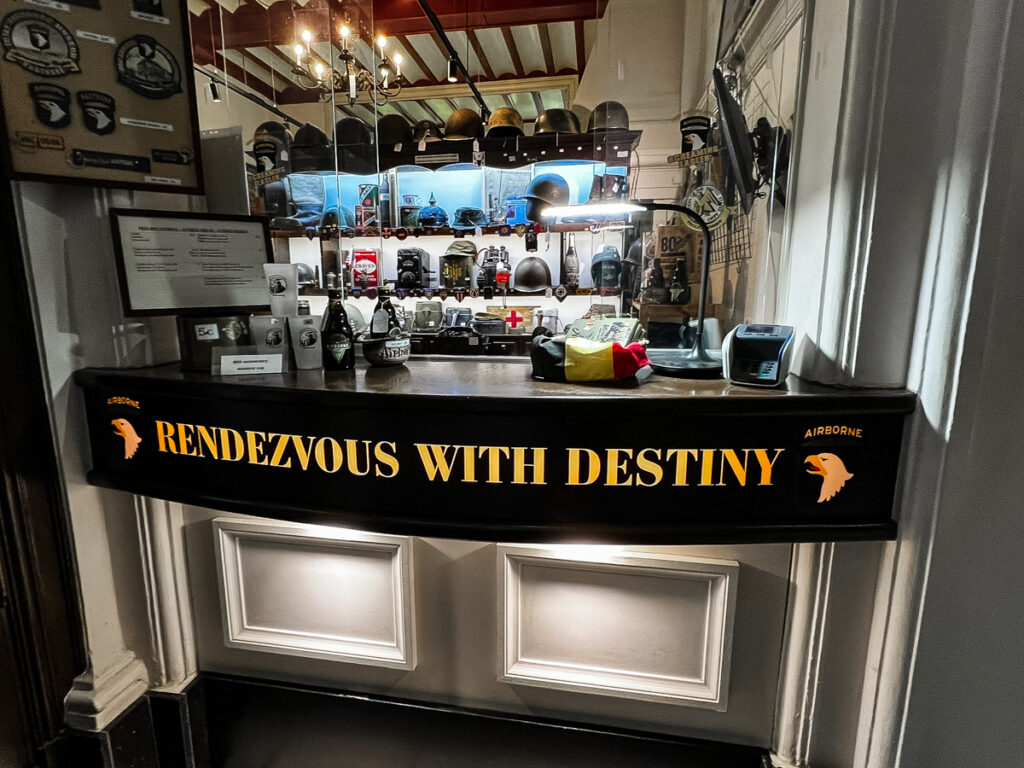
The exhibits give a picture of military life in foxholes
In the first large room, a central table features a detailed map of the battle. This can give you a good overview of the weeks of troop movements.
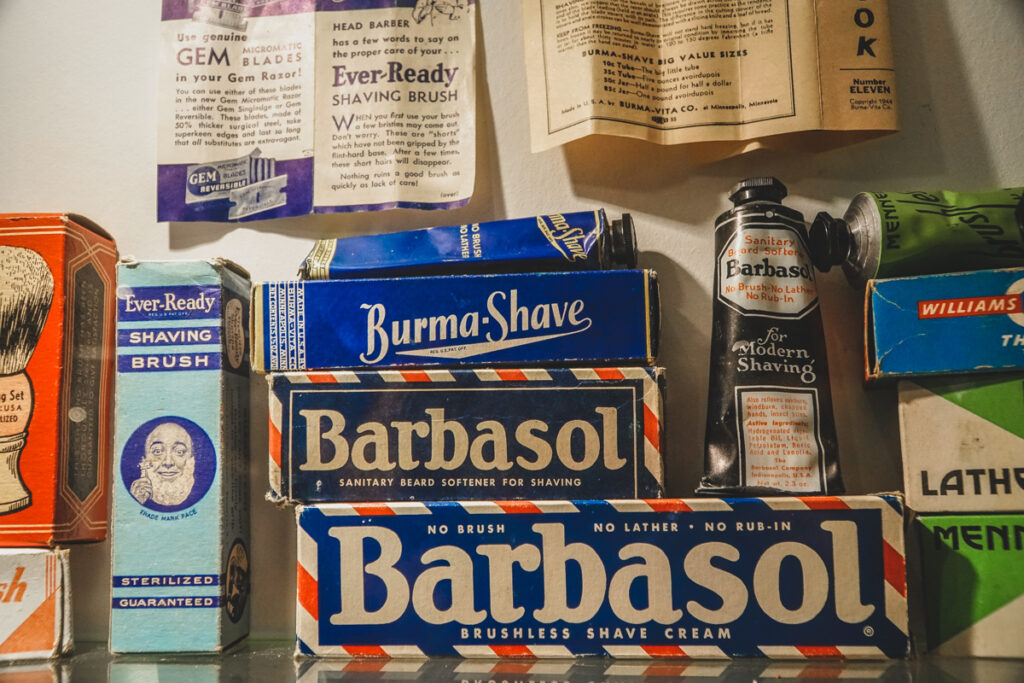
Around the edges of the room, and in rooms upstairs as well, many exhibits feature aspects of the life of a soldier in that winter of record cold. Displays of medicines, food, packs of gum, uniforms, and all kinds of personal belongings fill the glass cases.

See weaponry and ammunition
As you may expect, many display cases are filled with weaponry. Rifles, machine guns, and other firearms of both Allied and German make are here. Military vehicles, ammunition, and types of communication give insight into how the battle was fought.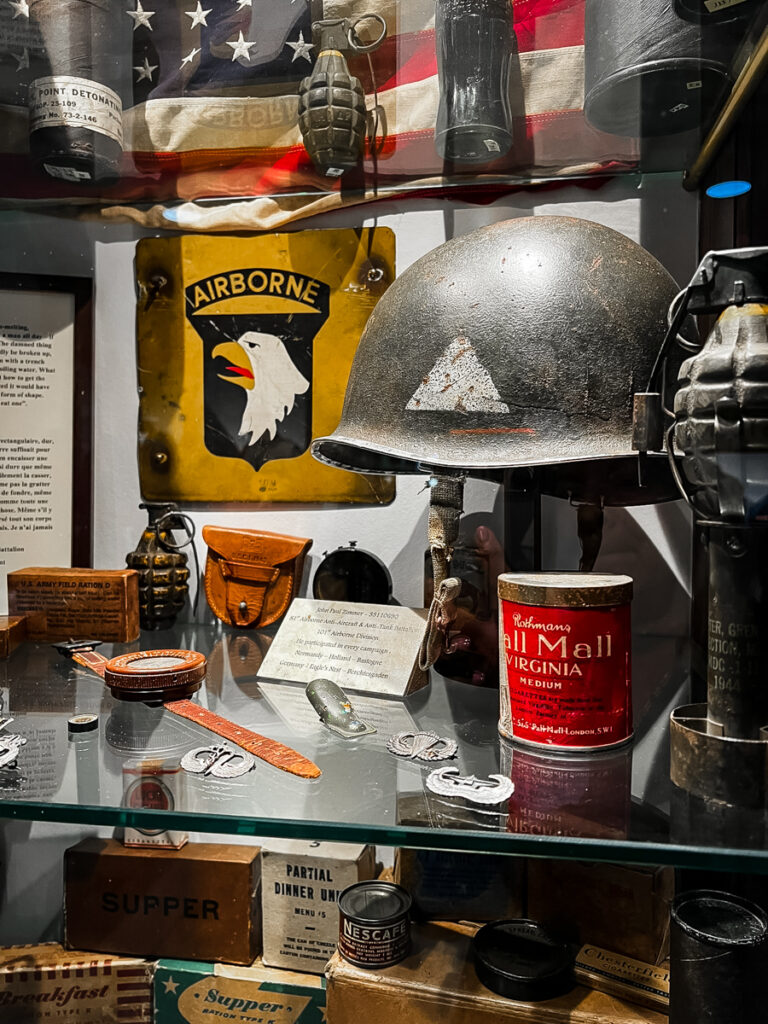

Communication equipment especially interests me. This display of a small German coding machine called the Converter M-209 immediately brings to mind the famous German Enigma machine. At Bletchley Park outside London, the key to the Enigma machine was broken and Allies were able to intercept messages. The Germans never knew their complicated code was figured out by Polish and British geniuses.
Incredible dioramas fill the museum
Soldiers experiencing life on the battle lines are depicted with dioramas of life-size mannequins and all the accoutrements of battle. A diorama that surprised me is a realistic scene of Belgians newly liberated from German occupation in the fall of 1944, before the Battle of the Bulge.

The bombardment room is a not-to-miss experience
Be sure to venture down to the basement to experience a bomb shelter. You sit in a darkened room, with windows showing some outside scenes. While a genuine recording made in a bomb shelter plays, you sit in the dark, hearing the bombs whistle and explode outside. A baby cries, people panic. It’s so realistic and you will emerge knowing a little about what so many civilians lived through during World War II.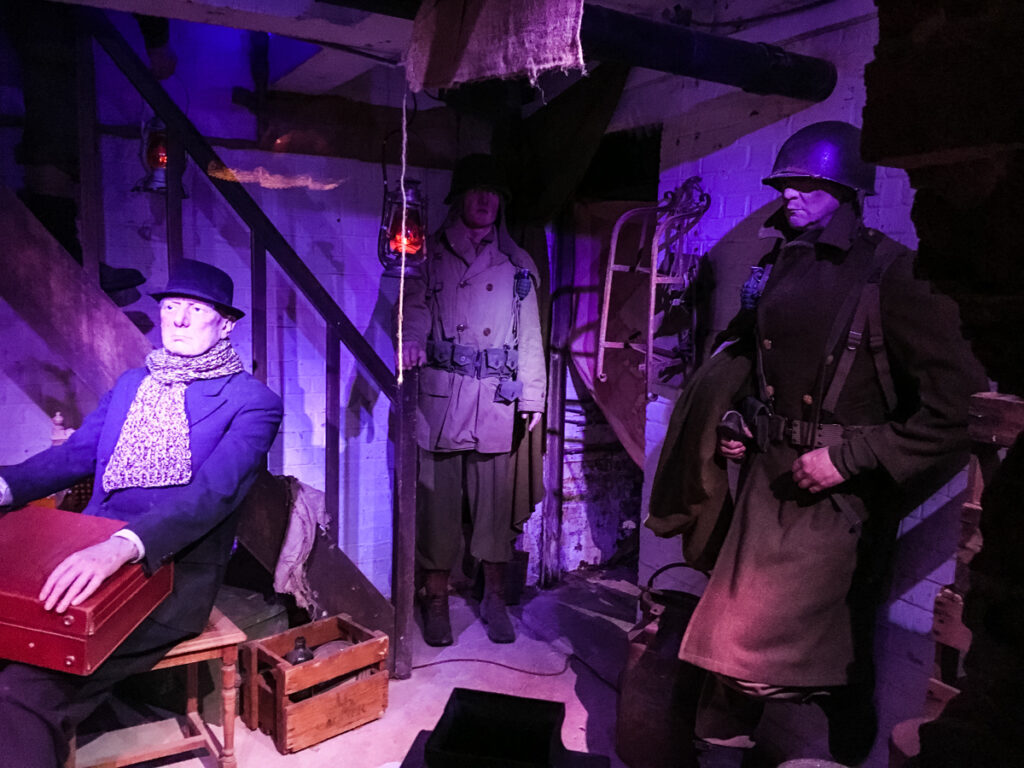
Book a battlefield tour with the museum
Your trip to Bastogne must include a visit to the battleground and foxholes in the forest and other sites near Bastogne where fighting raged. One option is to book this with the 101st Airborne Museum.
Book at least three weeks before you will be in Bastogne.
Another option I can highly recommend is Reg Jans, who lives in the area and is an expert historian on the Battle of the Bulge. I visited the 101st Airborne Museum, then spent the entire following day with Reg. Standing in the foxholes of the brave men of Easy Company is an experience you will always remember.
Practical Information for visiting the 101st Airborne Museum in Bastogne
Check the website for hours and prices. Currently the museum is closed on Mondays and Tuesdays.
After your visit to the museum, walk a few blocks to the center of Bastogne, the main square, for restaurants and gift shops.
The Main Square of Bastogne
The main square is now known as McAuliffe Square, and we ate lunch in the Café named “Nuts.” They serve a bowl of peanuts with each meal. 

 That evening, we went to dinner in the Italian restaurant Giorgi on the corner of the main square. This was the childhood home of nurse Renee LaMaire, “Angel of Bastogne,” who was killed in the bombing on Christmas Eve, 1944. The echoes of the past are everywhere, and by remembering, we keep alive those lost too soon.
Where to stay
If you go, I recommend staying at the Hotel Melba, just a 5-minute walk from the main square, with this lovely front patio. The hotel provides a lovely breakfast, comfortable rooms, and modern conveniences. It’s close to the central square of Bastogne. Choices for hotels are limited in this small town, but as long as you have accommodation at the Hotel Melba, you will be all set for seeing the sights.
Stay at the Hotel Melba for comfort and convenience during your time in Bastogne.


Read more about Tracing the Battle of the Bulge in Bastogne.
Interested in learning more about World War II in Europe? Check out these posts.
Learn more about the D-Day Beaches in Normandy
Visiting the D-Day Beaches: Utah Beach
Visiting the D-Day Beaches: Omaha Beach
Visiting the Five Normandy D-Day Beaches
Visiting the D-Day Beaches: Gold, Juno and Sword
Riding a Jeep Through Normandy
Learn more about World War II sites in Paris
Paris World War II Sites for History Lovers
Book your train tickets with Rail Europe for easy and reliable service.
Rail Europe partners with more than 230 train services such as SCNF, DB, and Swiss train lines. So, you can always find the transportation you need for your trip.

Renting a car? I can recommend renting with Auto Europe.


PIN IT FOR LATER!