
Things to Do in Wroclaw
Wroclaw is a small, charming Polish town in lower Silesia that will delight you when you visit. You will find a variety of things to do in Wroclaw no matter your interests. Wander around Wroclaw and enjoy a city with more than 1,000 years of history. Its buildings display various architecture styles in vibrant colors. And it’s picturesque waterways give Wroclaw the nickname of the “Venice of Poland.” Wroclaw’s strategic location on the banks of the Oder River is one reason it was fought over and inhabited by Bohemia, Prussia, Austria, and Germany as well as Poland. Today, all these factors work together and result in a city filled with a breathtaking variety of beauty and touches of whimsy everywhere.
You’ll want to fill your day in Wroclaw with good food, colorful sights, culture, layers of history, and the calming scenery of a gently flowing river. Read on for some of the top things to do when you visit this appealing city.
This post may contain affiliate links. That means I earn a bit of money if you purchase products through me. This involves no extra cost to you and it helps me maintain this blog.
Take in the Market Square (Rynek)
The heart of Wroclaw is the medieval Market Square. Europe boasts countless market squares, but Wroclaw’s is one of the largest and oldest. The square is bordered by buildings painted in a happy mix of colors. Henry the Bearded founded the square between 1214 and 1232. The medieval facades you enjoy today are lovely and accurate restorations, as the town was virtually destroyed during WWII.
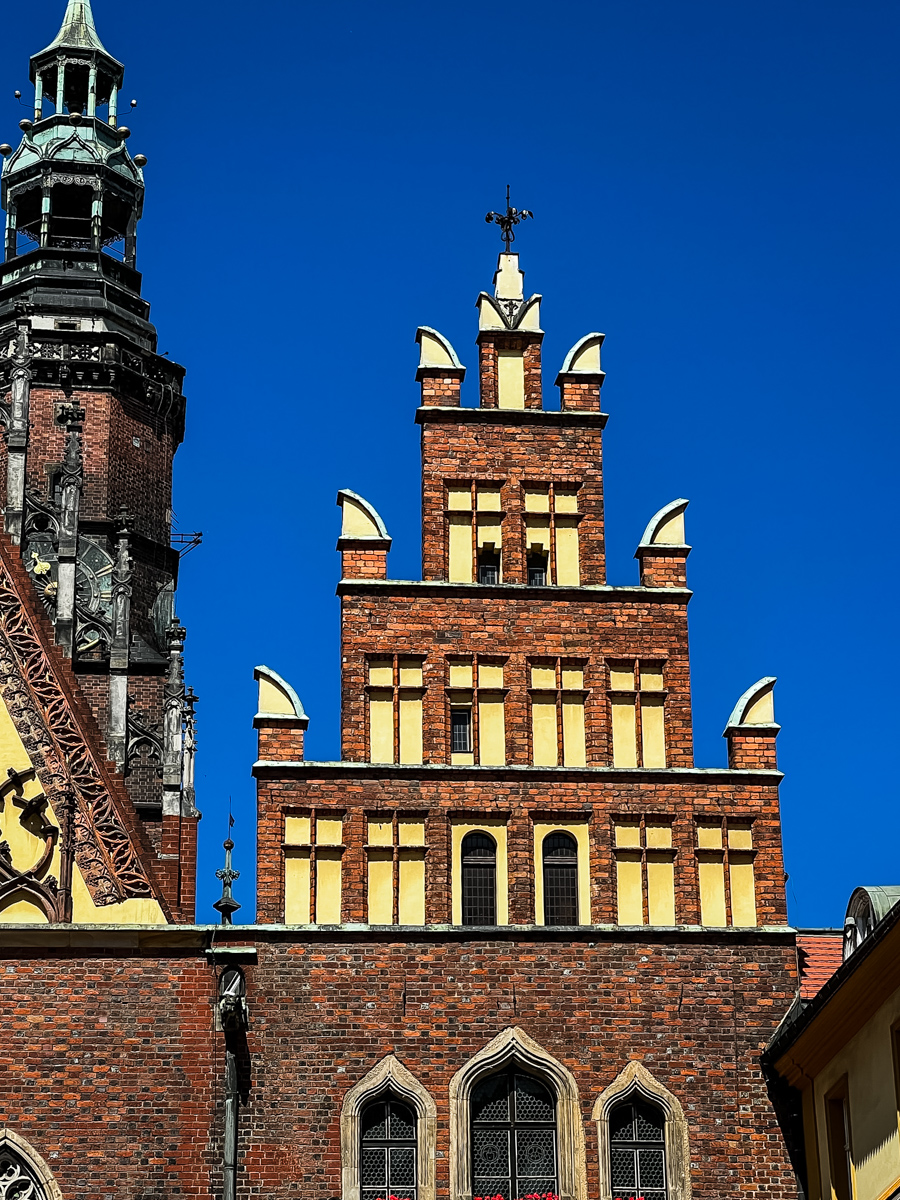
Be sure to find the Wrocław Town Hall, an impressive Gothic-style building that serves as a prominent landmark in the Market Square. You can admire its beautiful facade and climb the tower for panoramic views of the city.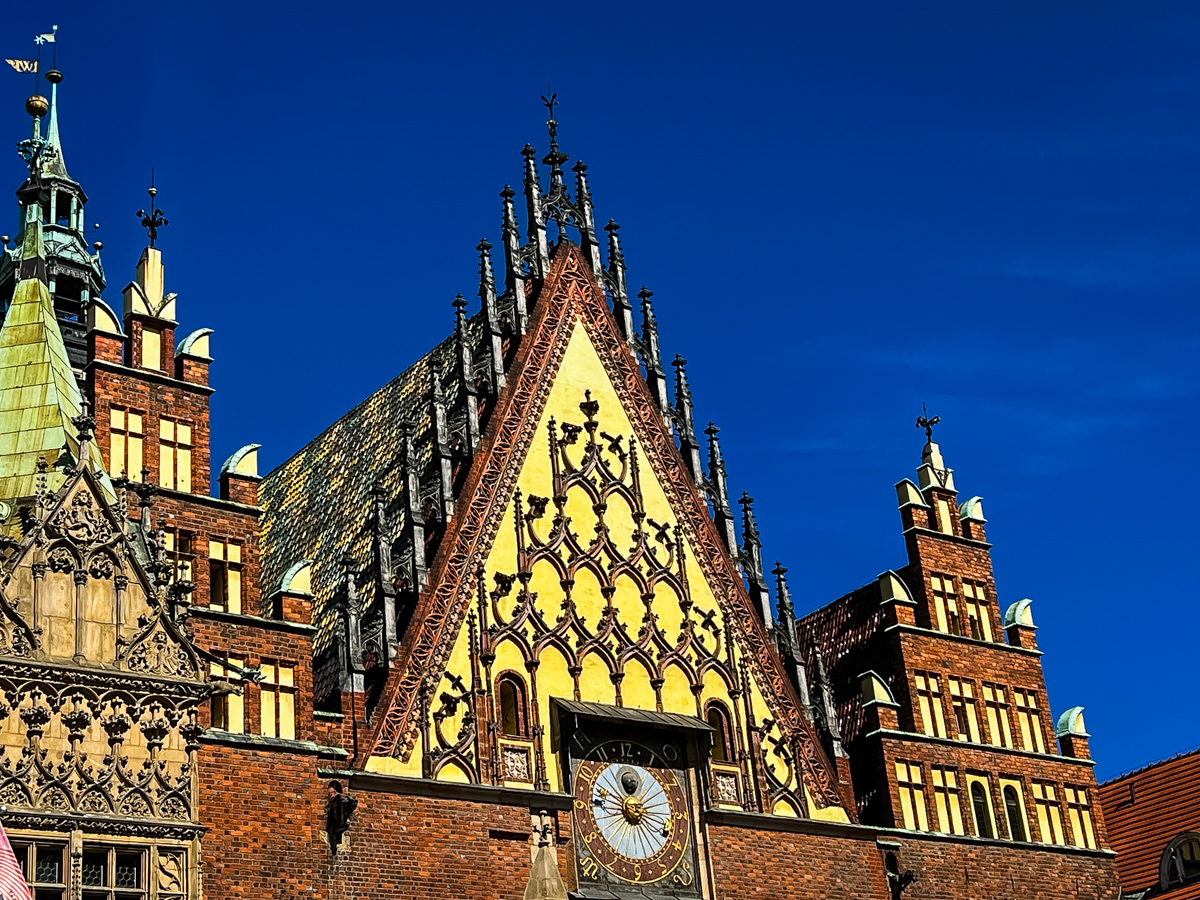
I recommend visiting the Market Square early in the morning. The sun gently shining on the buildings and the almost empty cobblestone streets are a memorable treat. Later, the stalls will open and you can browse the wares of the merchants.
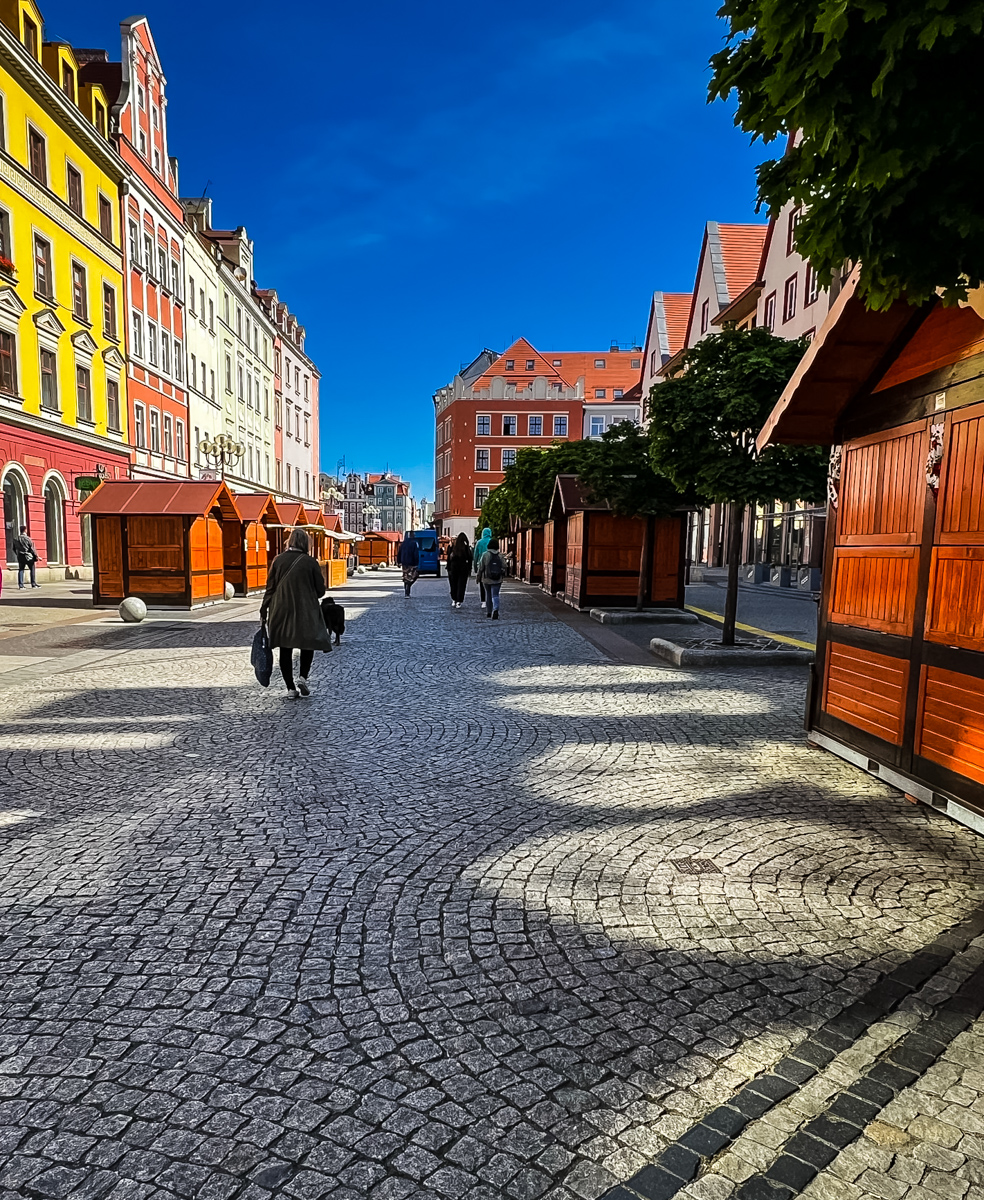
At night, you can see a captivating display at the central fountain, where water dances and turns colors to music.
See how many dwarves you can spot
Dwarves, or “krasnale” in Polish, are a beloved symbol of Wrocław. These small, bronze statues of dwarves can be found throughout the city. Each one is unique. And all the dwarves are engaged in a task or some kind of work. A fun tourist activity is seeing how many of these you can spot.
Why dwarves? The tradition of placing dwarf statues in Wrocław dates back to the 1980s during the communist era. The first dwarf, known as “Papa Dwarf,” was installed in 2001 as a tribute to the anti-communist movement. Since then, the number of dwarf statues has grown. They have become a symbol of freedom, resistance, and the city’s resilient spirit.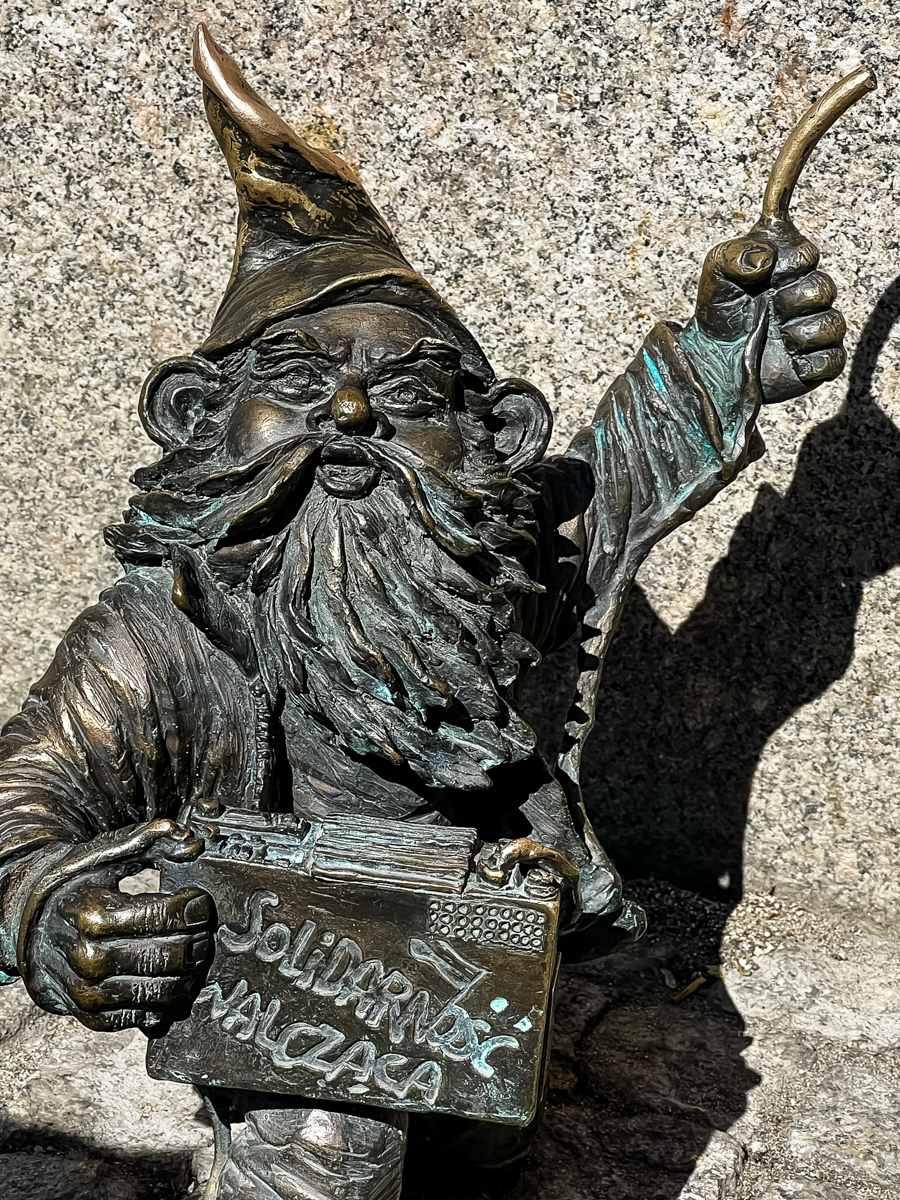
It’s astounding, but more than 600 dwarf statues sit scattered throughout Wrocław. You can find them in various parts of the city, including the Market Square, side streets, parks, and even hidden corners. Some of the popular locations to spot the dwarves include Świdnicka Street, Kazimierz Wielki Square, and Ostrów Tumski.
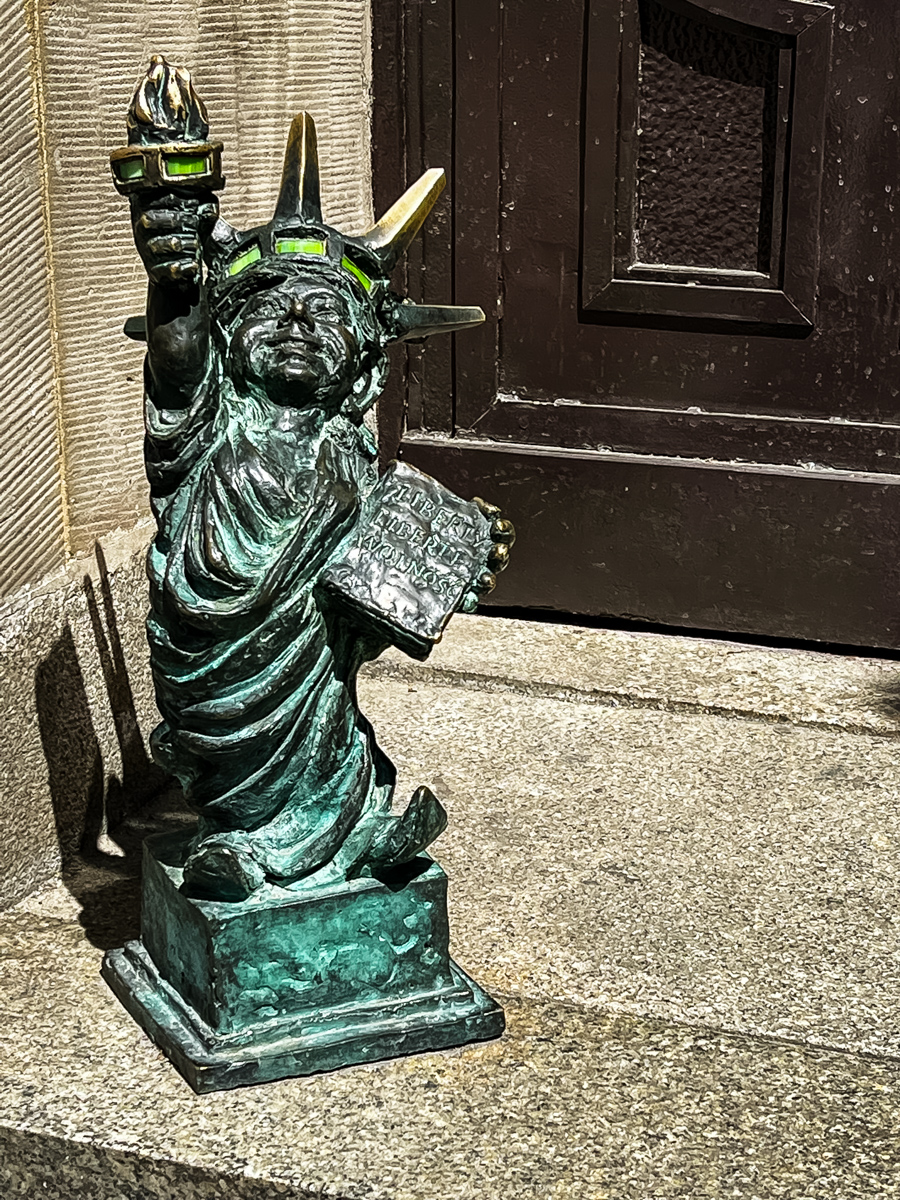
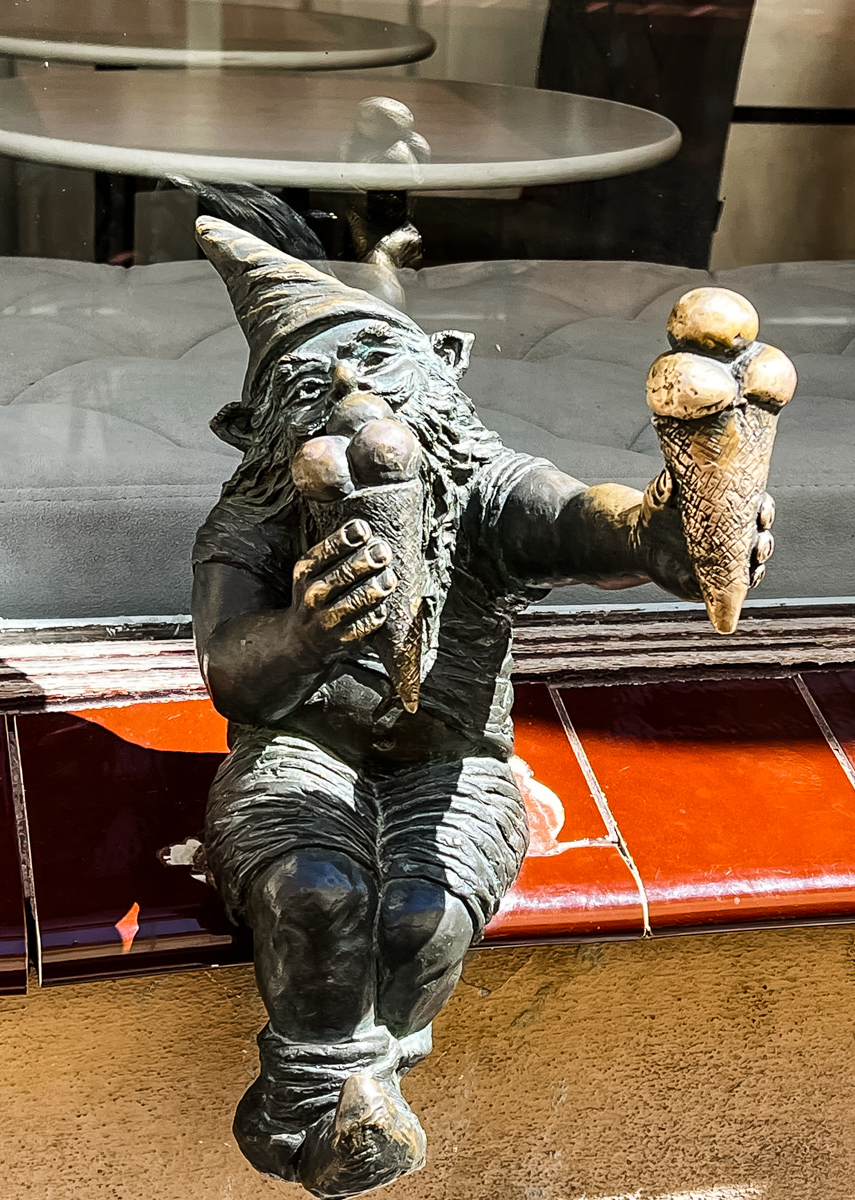
A few I spotted include the two who push in opposite directions on a large ball, making sure the ball goes nowhere; a Statue of Liberty dwarf; a friendly fellow offering ice cream; and a brave dwarf hanging high on a pole.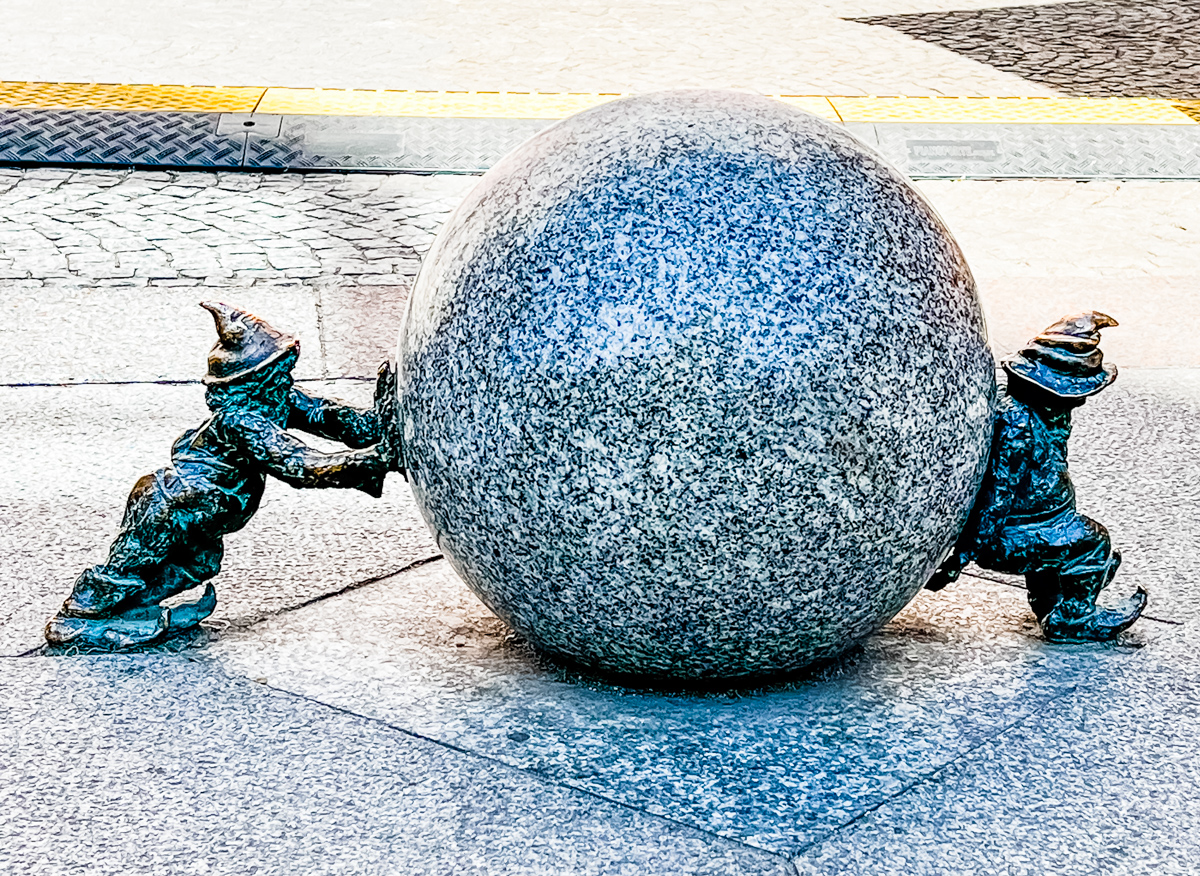
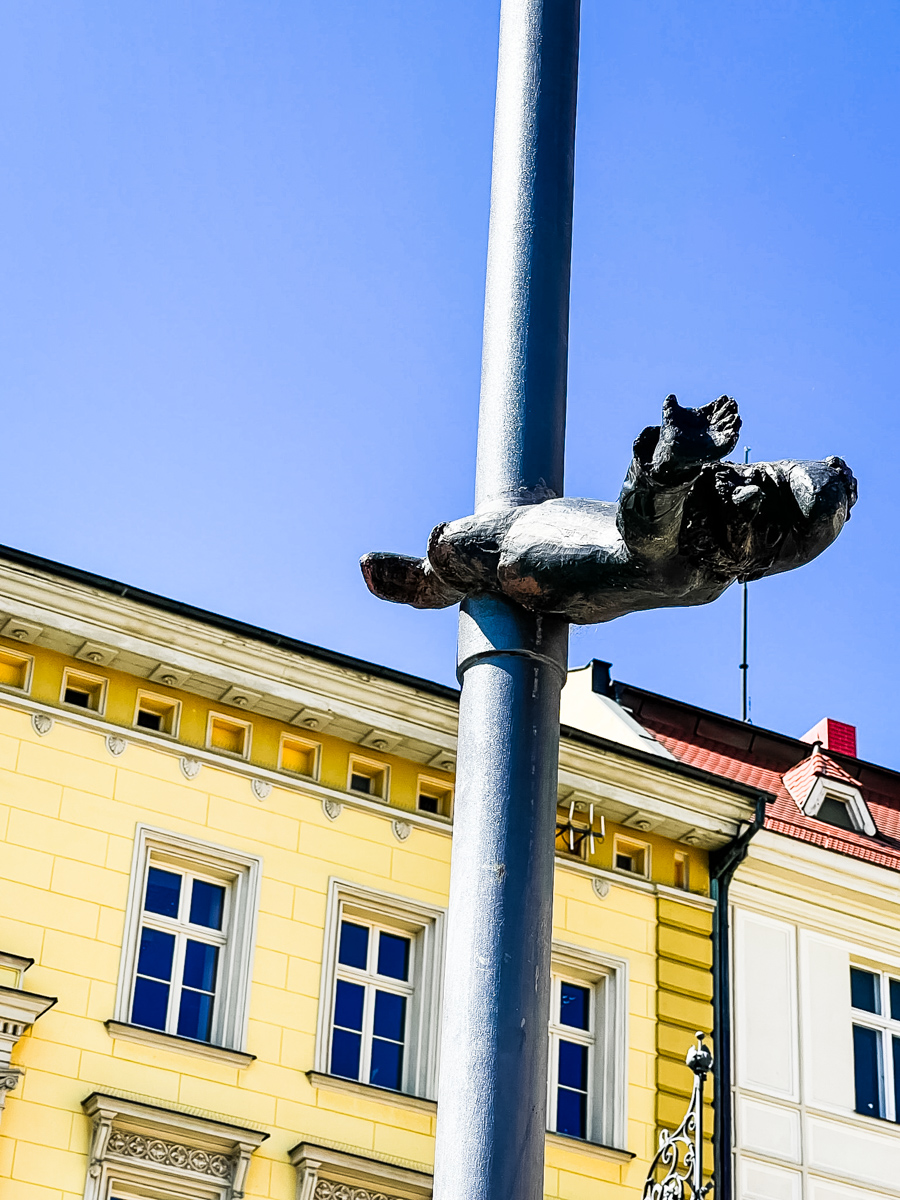
Can you find the dwarf in this photo?
You can purchase maps or an app that provide information about the different dwarf locations to enhance your adventure.
Smile at the whimsical sights in Wroclaw
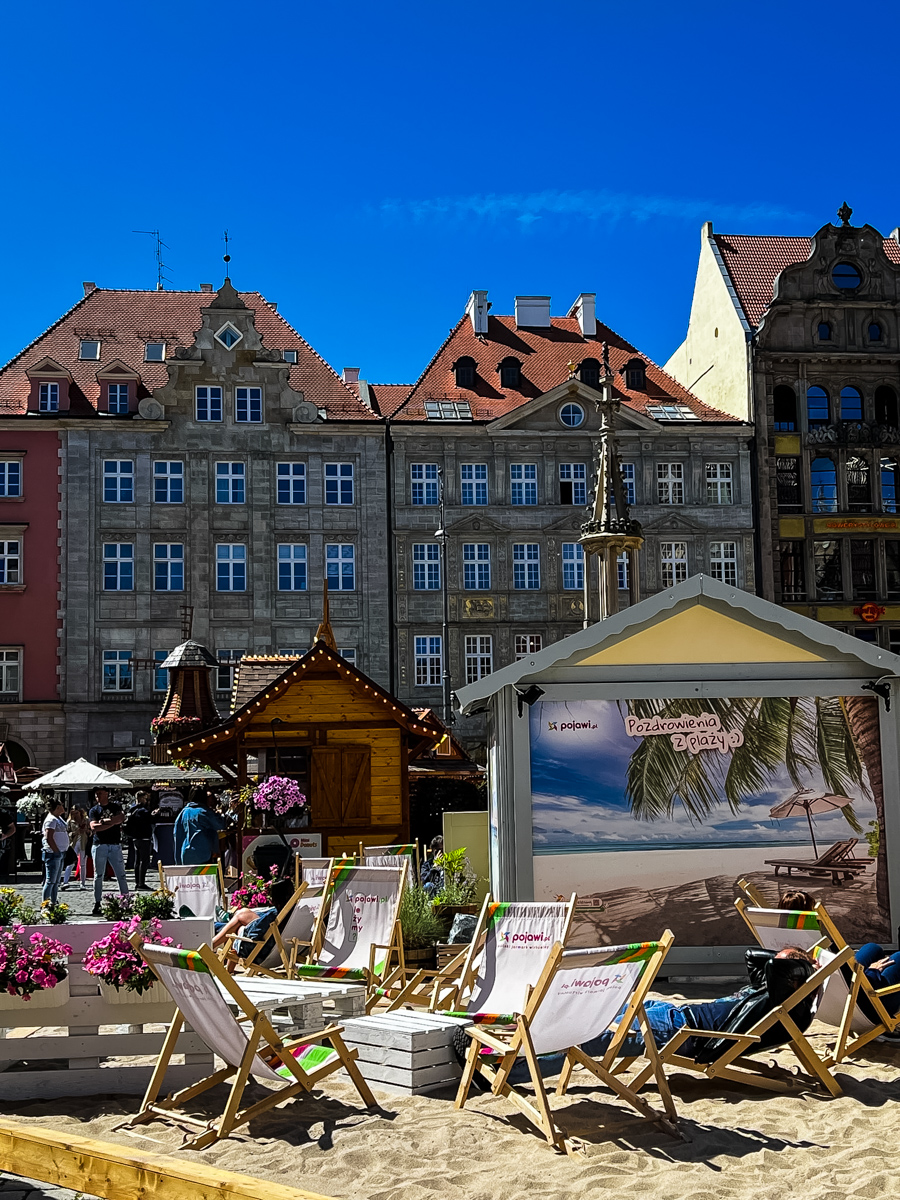
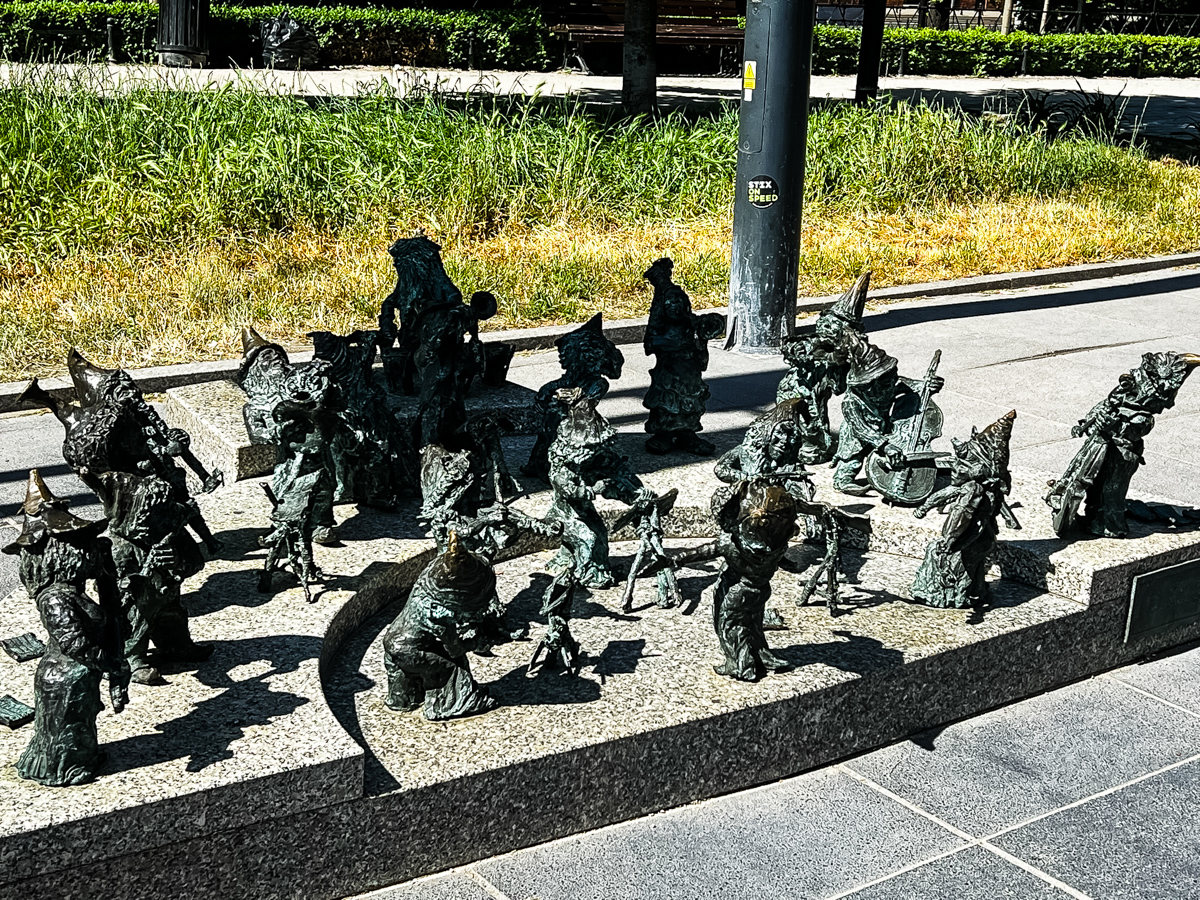
This city surprised me several times with marvelous sights. Look for a flower lady, a patch of sandy beach in the middle of the Market Square complete with beach chairs for sunning, and a complete orchestra of dwarves outside the elegant concert hall. You’re going to walk around Wroclaw with a smile on your face.
Look for historic cathedrals
In the hundreds of years of Wroclaw’s history, churches have prevailed and still tower over the landscape.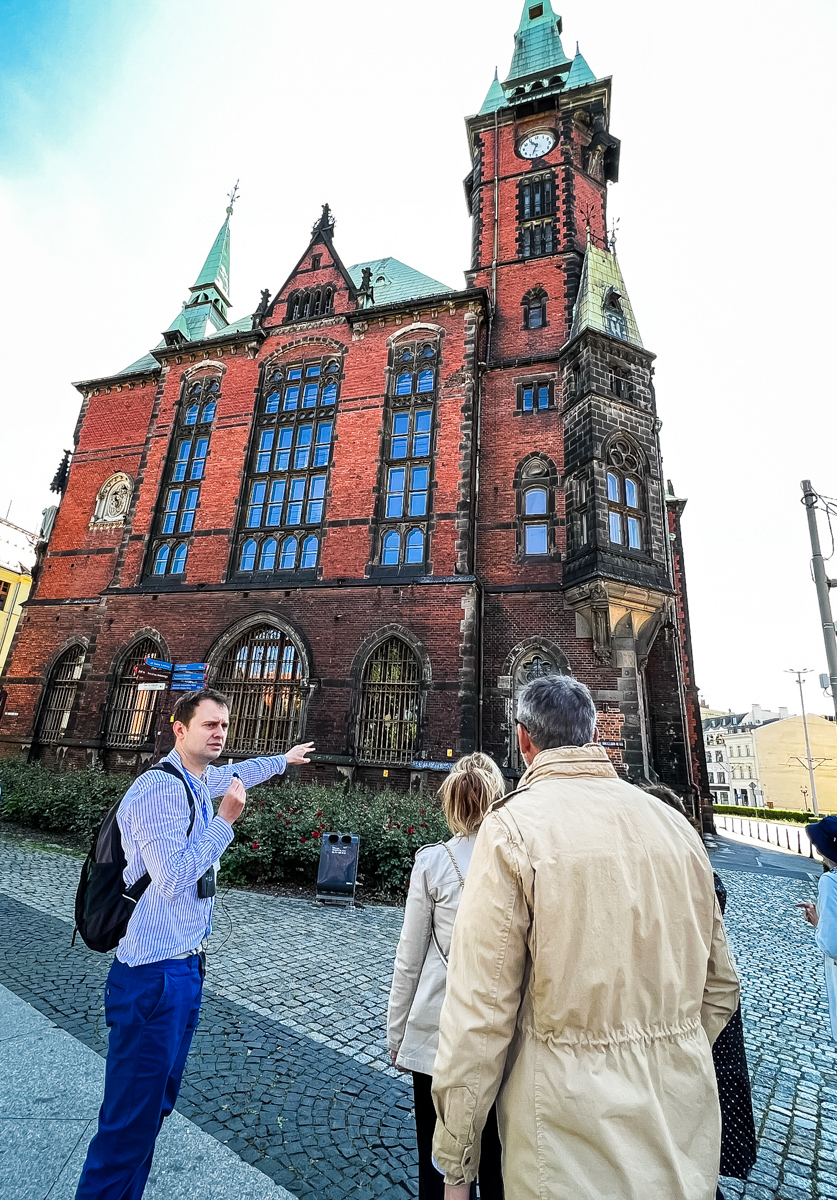
Three notable churches to observe or visit are:
- Wrocław Cathedral (St. John the Baptist Cathedral): Located on Cathedral Island, Wrocław Cathedral is one of the city’s landmarks and is the oldest and largest church in Wroclaw. It is the seat of the Archdiocese of Wrocław and features a mix of architectural styles, including Gothic, Baroque, and Romanesque. This cathedral houses numerous chapels, crypts, and religious artifacts.
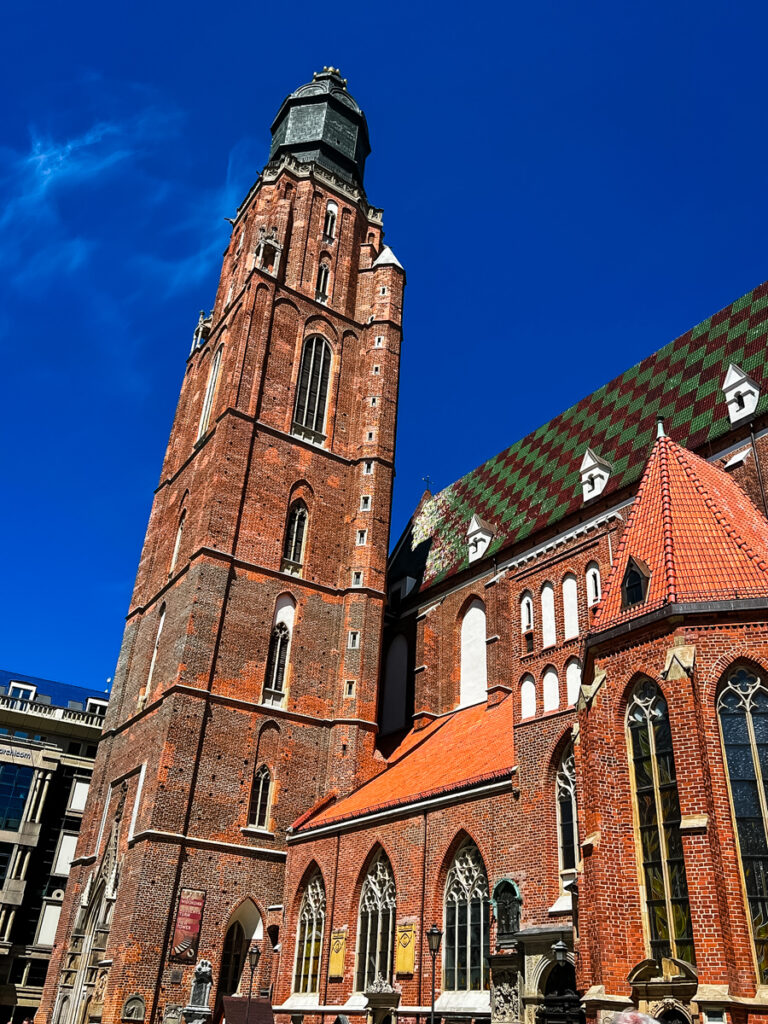
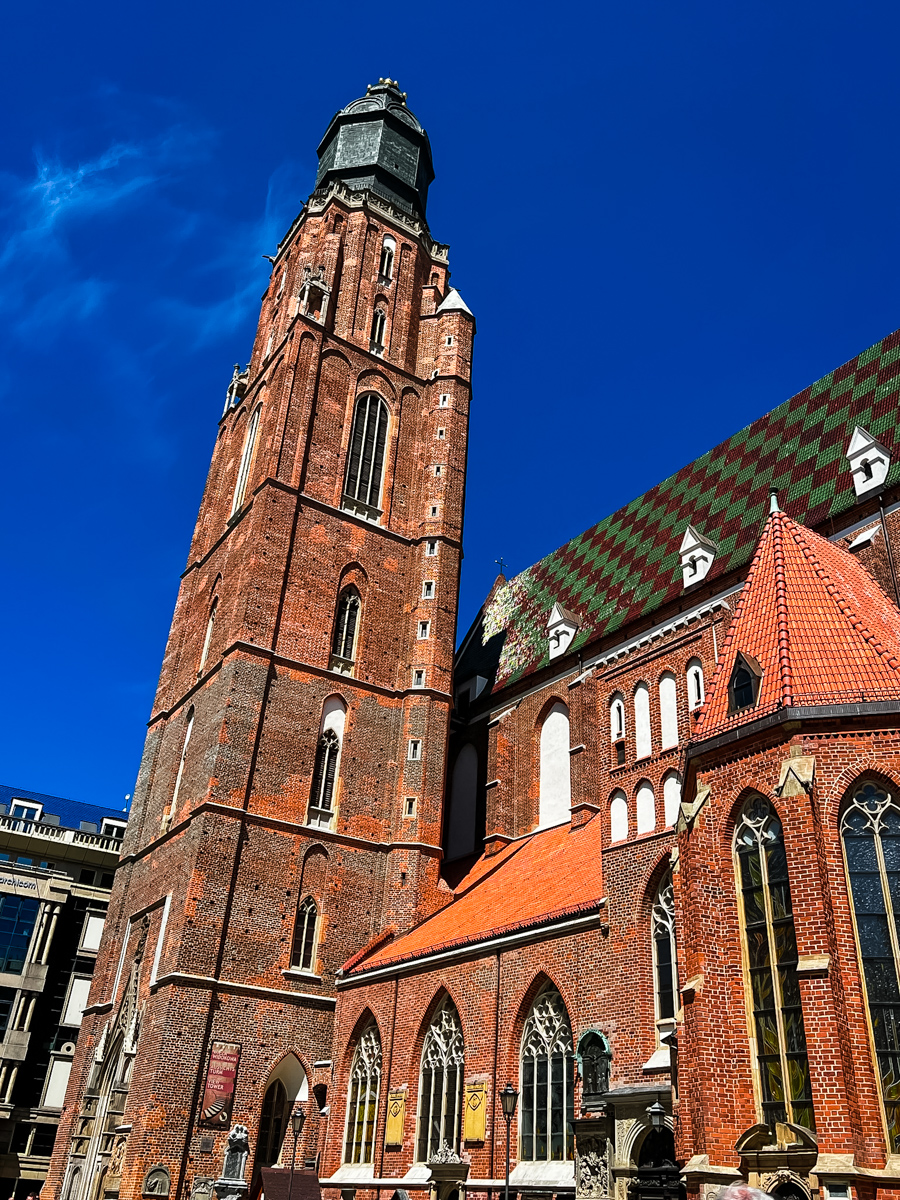
- Elizabeth’s Church: This church in the Market Square is a magnificent Gothic-style church with distinctive twin towers. It is the largest brick church in Wrocław and houses impressive stained-glass windows and an ornate interior.
- Mary Magdalene Church: This stunning Baroque-style church is near the Market Square. It’s known for its beautiful facade and elaborate interior decorations. The church is adorned with colorful frescoes, sculptures, and a magnificent altarpiece.
Marvel at the lovely waterways
With the Oder River banks forming numerous “islands” in the city, Wroclaw offers deep blue waterways in all directions. More than 100 bridges span the water. Whether you want to savor a leisurely lunch riverside or head out on a boat, Wroclaw will not disappoint.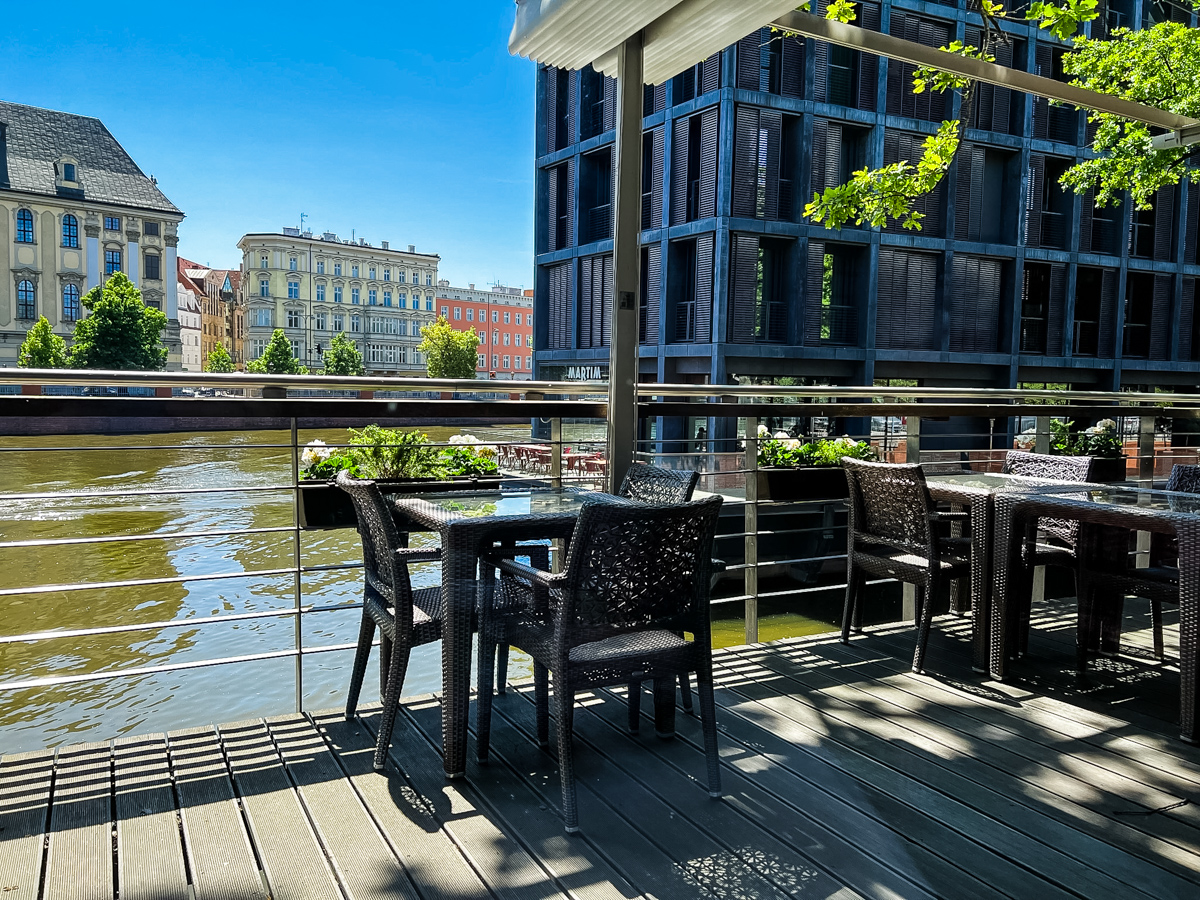

Trace WWII history
On a morning walking tour in Wroclaw, my group traced places reflecting events from WWII. The tour, lasting 12 days total, is run by the National WWII Museum in New Orleans. It’s called “The Rise and the Fall of Hitler’s Germany.” Historian Dr. Alexandra Richie, one of the world’s foremost experts on World War II in Europe, led the tour. If this piques your interest, check out future tour dates. I can’t recommend it highly enough. Every day contained rich, intense experiences. And Wroclaw was one of my favorite cities included in the sweeping itinerary of German and Polish sites.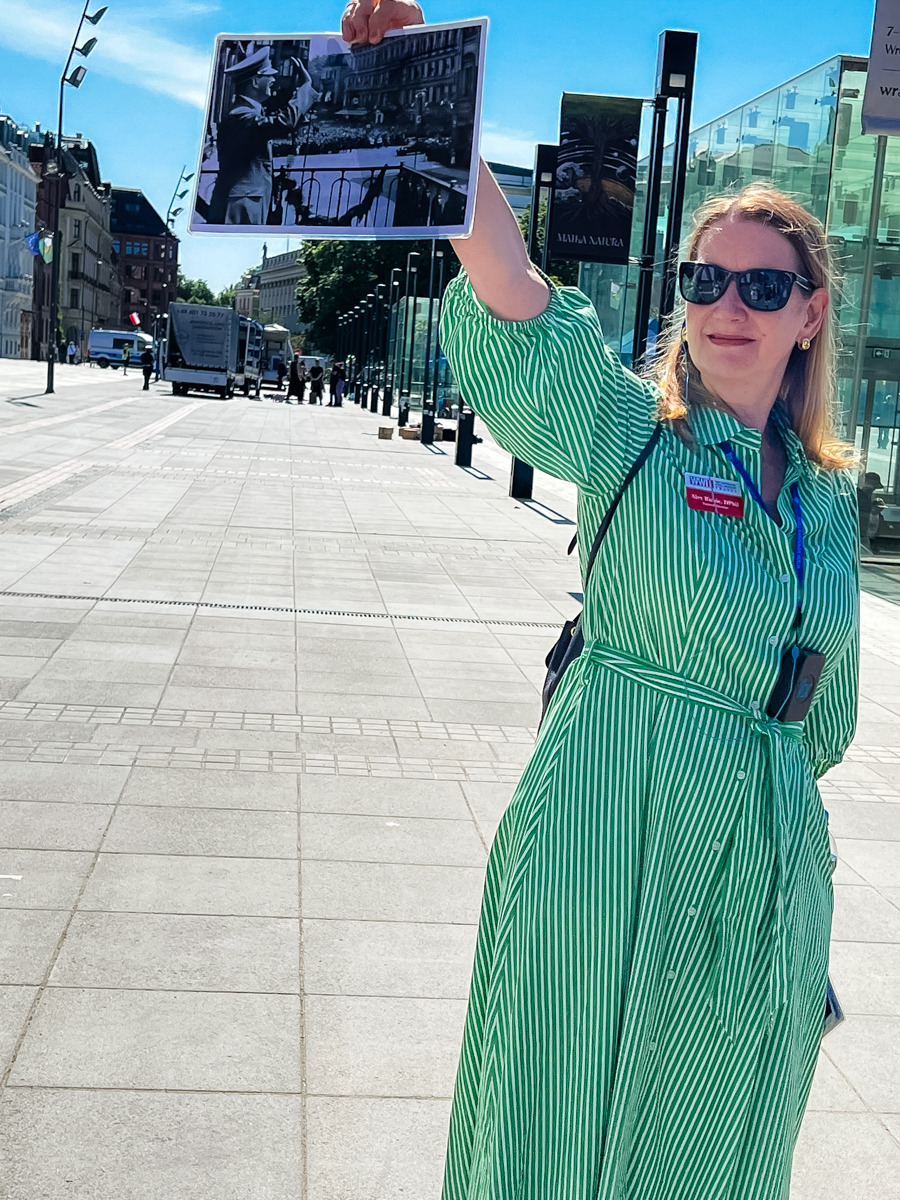
The Museum of Pan Tadeusz on the Market Square is one place to look into history. It tells the story of an extraordinary book, and you will also see hundreds of other authentic manuscripts, old prints, etchings, paintings, and sculptures. We also took in exhibitions dedicated to “witnesses of history” Jan Nowak-Jeziorański and Władysław Bartoszewski, who was Dr. Richie’s father-in-law. He was in prison camps during WWII, then worked the rest of his life for justice.
The ghetto memorial wall is a tribute to the Jews who were deported to the Warsaw Ghetto during WWII.
And Wroclaw features a memorial to German hero Dietrich Bonhoeffer, who Hitler ordered executed for his part in the attempted assassination plot of July 1944 (Valkyrie)..Bonhoeffer wrote books and articles from his prison cell that are still widely read today. He believed in God and justice, and died shortly before the end of the war for his efforts in fighting Nazi tyranny.
Eating out in Wroclaw
You will likely want to indulge in traditional Polish food during your time in Wroclaw. I ate my fill of pierogis, which are dumplings with a variety of fillings. Be sure to sample some! Whether you are after traditional Polish food or another type of cuisine, Wroclaw offers countless choices. Here are a few popular restaurants you can consider:
Pod Fredra: Easy to find, as it’s next to the Market Square Town Hall, Pod Fredra offers traditional Polish cuisine such as pierogis, cabbage parcels, pork ribs and smokehouse ham and fish. The restaurant is known for its cozy atmosphere and excellent service.
La Maddalena: For lovers of Italian cuisine, La Maddalena is a popular choice. Delicious pasta, pizza, and other Italian specialties, all made with authentic ingredients, are served.
Zafishowani: If you’re a seafood lover, Zafishowani is a great choice. This restaurant serves a variety of fresh fish and seafood dishes prepared in a modern and creative way.
Where to stay in Wroclaw
As the Market Square is the vibrant center of Wroclaw, I recommend choosing a hotel within easy walking distance of this area.
I stayed at the AC Hotel by Marriott. Not only was the location perfect but also the hotel is stylish and modern. A restaurant and rooftop bar are convenient. The buffet breakfast proved impressive, with all kinds of foods pleasingly displayed. There was even an intriguing section of juices.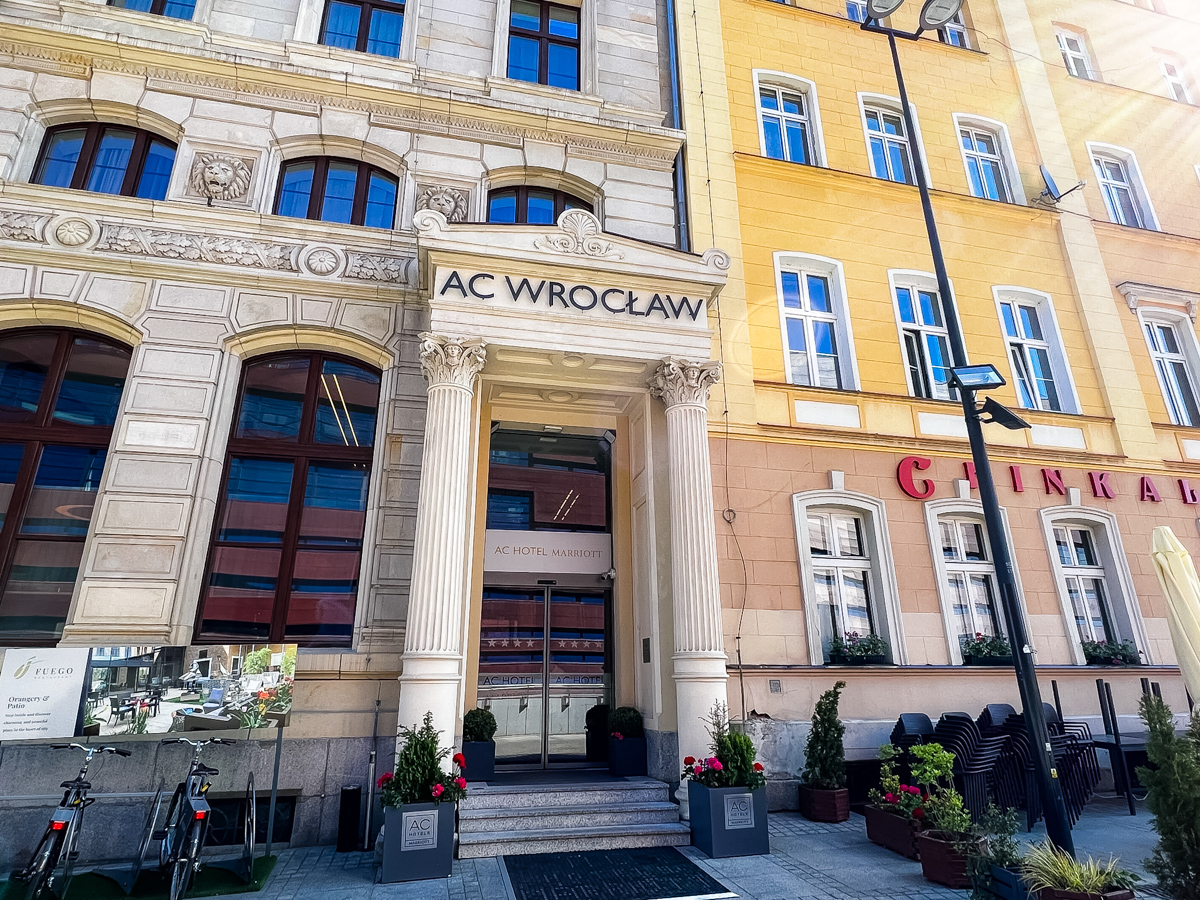


Here are a few other choices for your stay in Wroclaw:
The Monopol Hotel: Located in the heart of Wrocław, The Monopol is a luxurious 5-star hotel that combines modern elegance with a historic atmosphere. It offers spacious rooms, a spa, a fitness center, and fine dining options.
Radisson Blu Hotel: Situated near the famous Wrocław Cathedral, the Radisson Blu Hotel offers contemporary rooms, excellent amenities, and panoramic views of the city. It features a rooftop terrace, a wellness center, and an on-site restaurant.
Book your train tickets with Rail Europe for easy and reliable service.
Rail Europe partners with more than 230 train services such as SCNF, DB, and Swiss train lines. So, you can always find the transportation you need for your trip.
You can see the central area of Wroclaw in a day. Stay for longer if you can, because there are plenty of things to do in Wroclaw. The friendly people, bright-colored buildings, yummy food, and lots of intriguing dwarves will keep you busy and happy!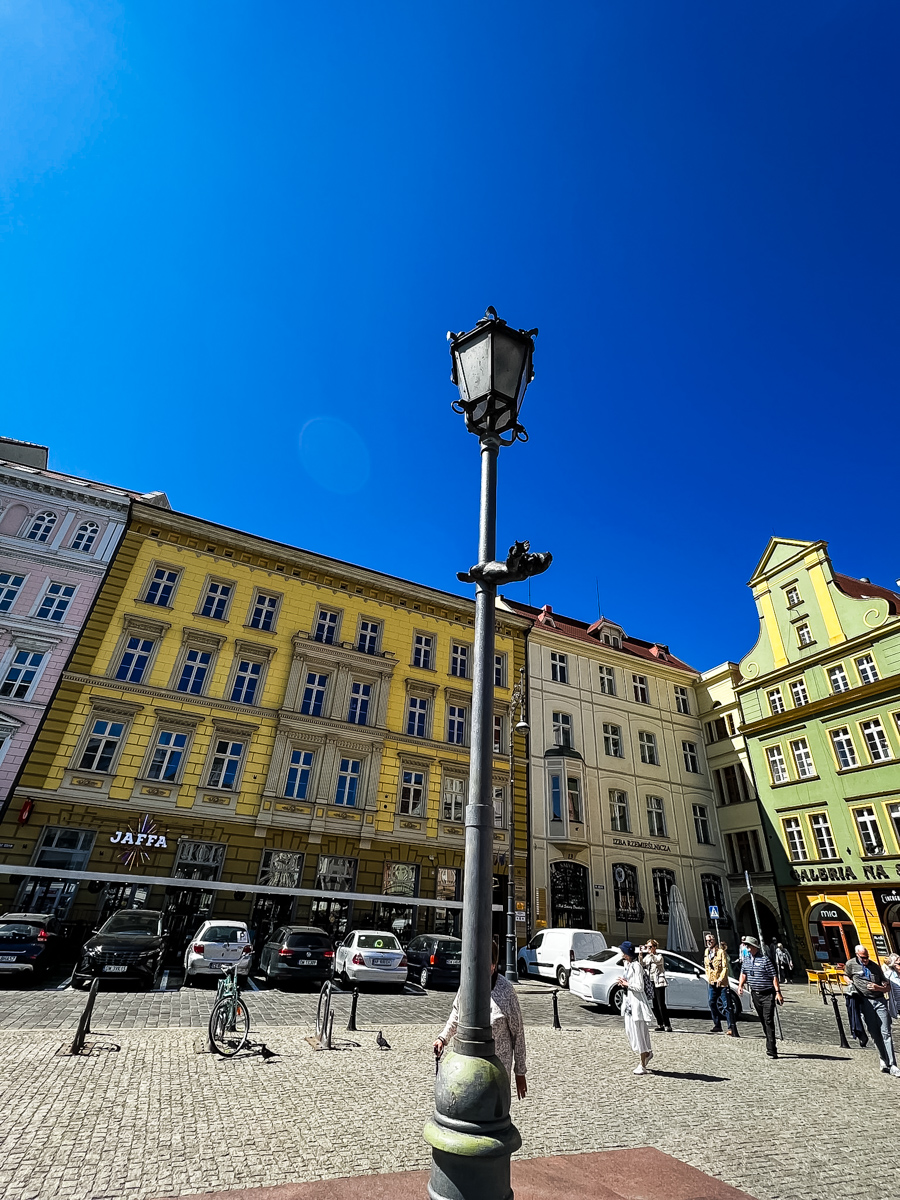


PIN IT FOR TRAVEL PLANNING!



Beautiful architecture.
I absolutely loved reading this post, and I’ll certainly be adding Wroclaw to my list of places to visit. I am a huge history nerd, and I would absolutely love the WWII tours–no doubt. Great post!
I found this post to be incredibly captivating, and it has undoubtedly piqued my interest. Wroclaw is now a definite addition to my ever-growing list of places to explore. Thank you for sharing such an engaging experience!