Awesome Places to Visit in Belfast
Belfast is a city rich in hundreds of years of history, and it offers you so much to experience. At every turn, its streets reveal stories of ambition, violence, resilience, and artistry. Here you find both the elegance of Victorian architecture, the tension in neighborhoods still behind walls and gates, famous dockyards, and the contemporary designs of new construction. You’ll find SO many places to visit in Belfast that you will always remember.
This post contains affiliate links. Clicking on them may result in a commission being paid to us if you purchase afterwards. This is at no extra cost to you. Thanks.
Reasons for visiting Belfast
Many visitors come to Belfast primarily because of the RMS Titanic. Few cities can claim a legacy as famous as Belfast’s shipyards. The Titanic was built here, bringing to Belfast international acclaim. Despite its doomed voyage, the Titanic has a place in history. And visitors can still feel that connection at the Titanic Experience, an award-winning museum that tells the story of the ship and the city that created her.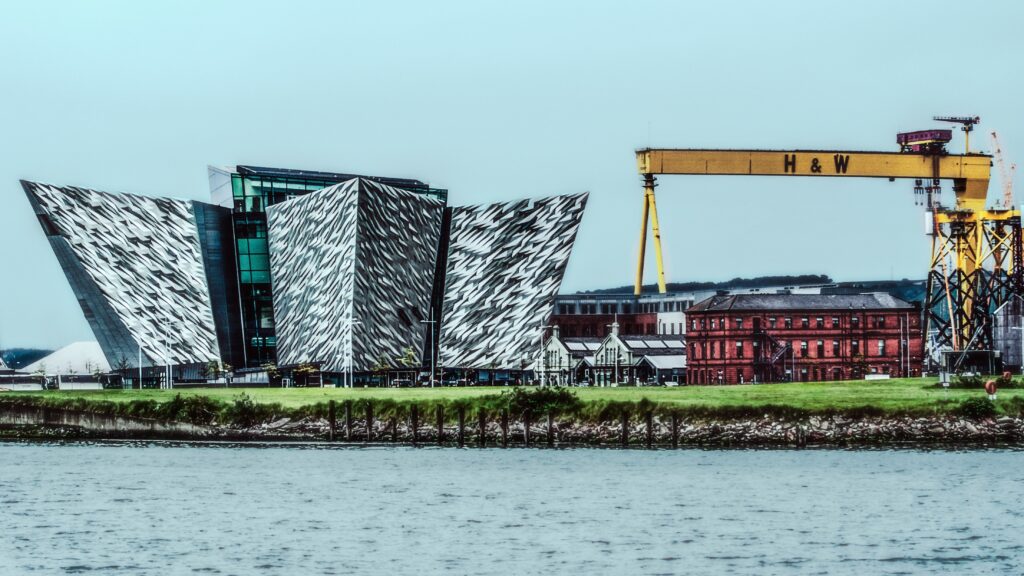
What surprised me was that Belfast offers so much more to see. Its grand City Hall, bustling Cathedral Quarter, and its Peace Walls all reflect a city that has reinvented itself while holding fast to its heritage. Walk its cobbled lanes, linger in its storied pubs, or admire its murals, and you’ll discover a place where the past and present mingle and present endlessly fascinating experiences.
Belfast and its friendly people invite you to explore, to look closer, and to ponder shared humanity. This is a city that rewards curiosity, a place where layers of history are on view everywhere you look.
An easy way to plan your visit to Belfast
The main question for visitors is how to spend your time here! How do you narrow down the places to visit in Belfast during the short time you are there?
Read on to learn more about the different areas of Belfast. Figure out what appeals most and what your priorities will be when you visit. You can’t go wrong, but you’ll likely run out of time to see all you want to take in. You’ll want to return someday!
A word about where to stay. The hotel where I stayed, the Maldron, is in the Linen Quarter. I found this central to walking to other areas (or taking a quick taxi ride). This is a new hotel with all the modern amenities. And you can start your day with a hearty breakfast buffet that features an amazing array of foods.
Plan your time in Belfast according to its main areas
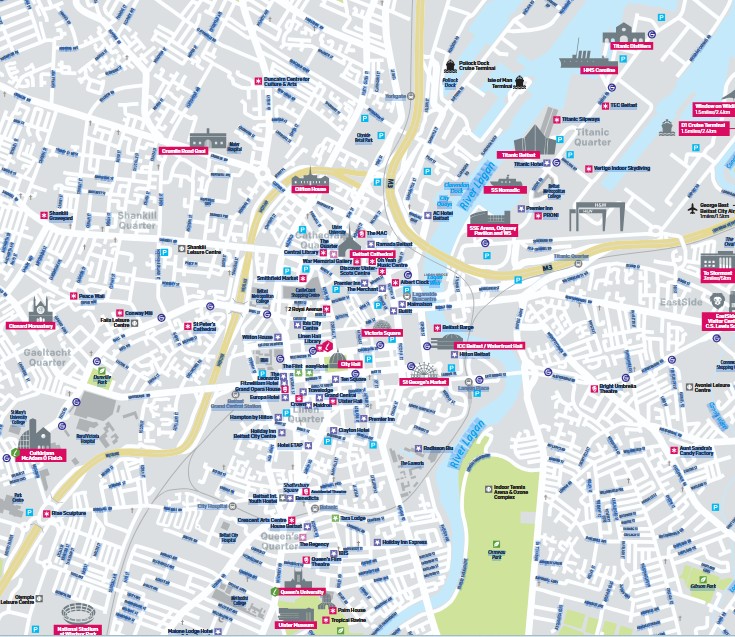
Belfast is divided into five cultural quarters, each with its own character and history. (Note: Sometimes it’s divided into seven quarters; my tour guide spoke of five quarters, and I think that’s an easier way to plan your visit.) One way to plan a visit to Belfast is to figure out which areas to visit and how long to spend in each.
As obviously “five quarters” is a bit wonky, the quarters are not official divisions. They are themed districts that showcase the heritage and arts of Belfast. And this can make itinerary planning easier.
The areas of Belfast are:
- The Titanic Quarter (east)
- The Gaeltacht Quarter (west)
- The Queen’s Quarter (south)
- The Linen Quarter (central)
- The Cathedral Quarter (north)
Here’s a map showing these quarters (plus a few). The “quarters” are marked with light lettering. They are a way to look a the city, but lines for them really can’t be drawn on a map.
A look at the highlights of each area will help you prioritize your time.
The Titanic Quarter
This is the most well-known visitor destination in Belfast. Even if your time in Belfast is limited, this is likely where you will head.
Yes, the Titanic was built right here, and you can stand on the docks, the very site of this massive construction project.
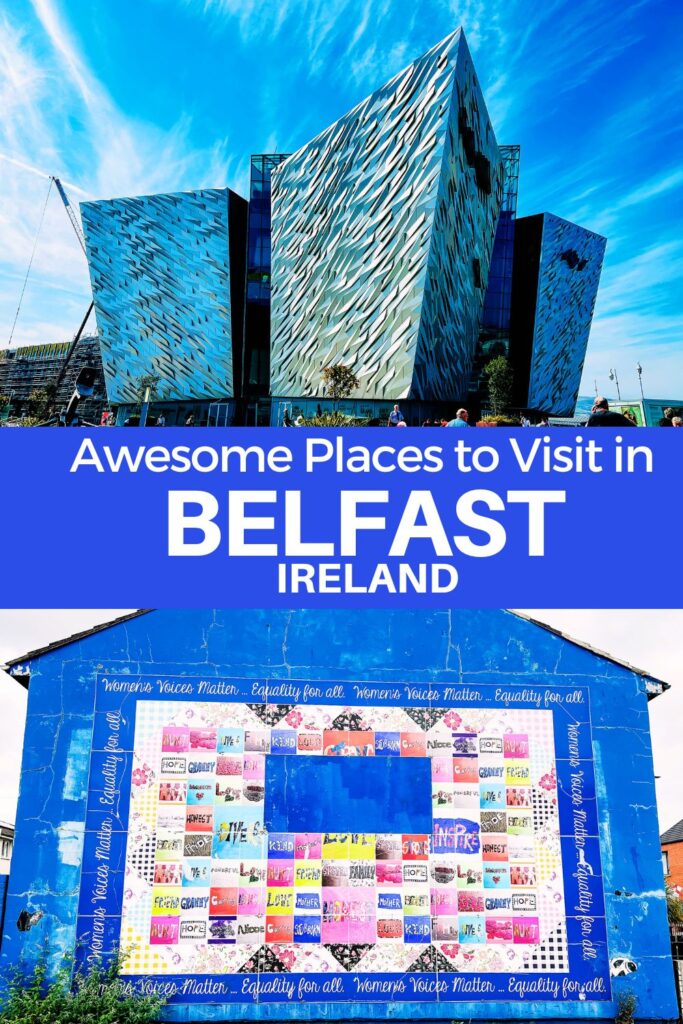
Today, the gigantic Titanic Experience dominates these docks. It’s located on the former Harland & Wolff shipyard where RMS Titanic was built and launched. This interactive museum tells in detail the story of the ship and also the broader history of Belfast and shipbuilding. The outside of the building looks like the huge ship.
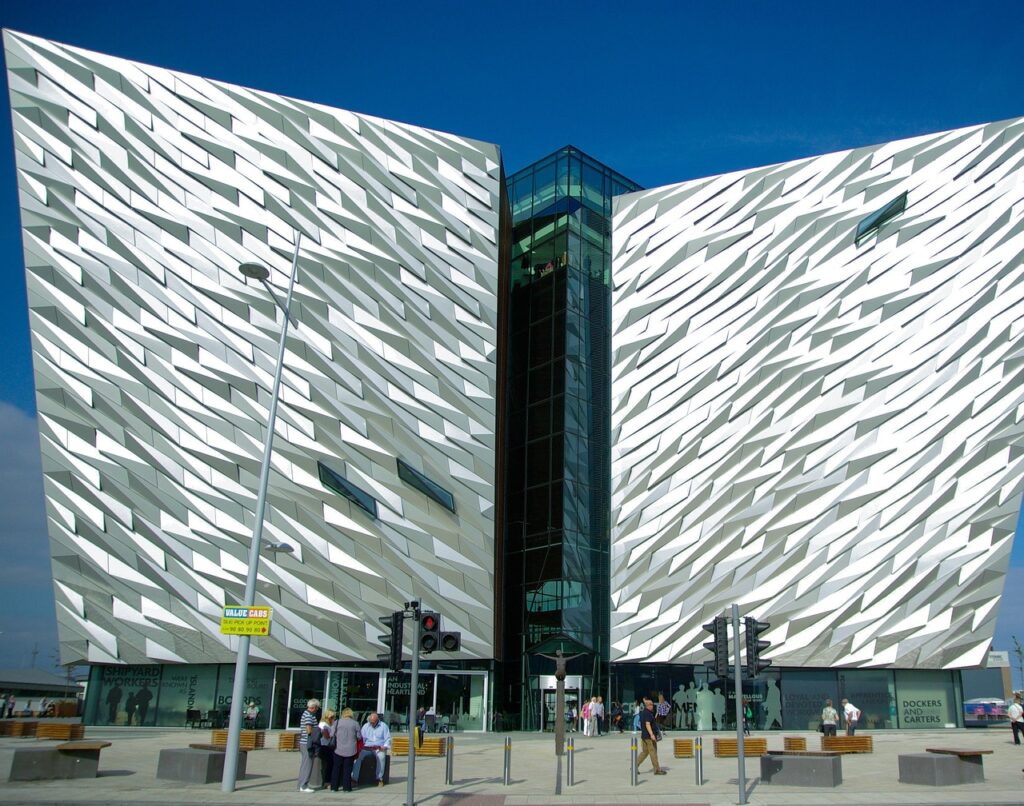 Museum galleries include:
- Boomtown Belfast: This gallery sets the scene, depicting the city’s industrial rise in the early 1900s.
- Shipyard Ride: This ride takes you through a shipyard reconstruction, complete with heat, sound, and visuals of riveters at work. (This was fun!)
- The Launch: Multimedia displays show the Titanic’s construction and launch into Belfast Lough in 1911.
- The Fit-Out: You’ll see what the inside of the ship looked like on every level.
- The Maiden Voyage: See what it was like to experience the only voyage of this grand ship.
- The Sinking: This is a colorful, massive depiction of the Titanic striking the iceberg, distress calls, and passenger experiences. I spent a looong time in this gallery. It’s awesome!
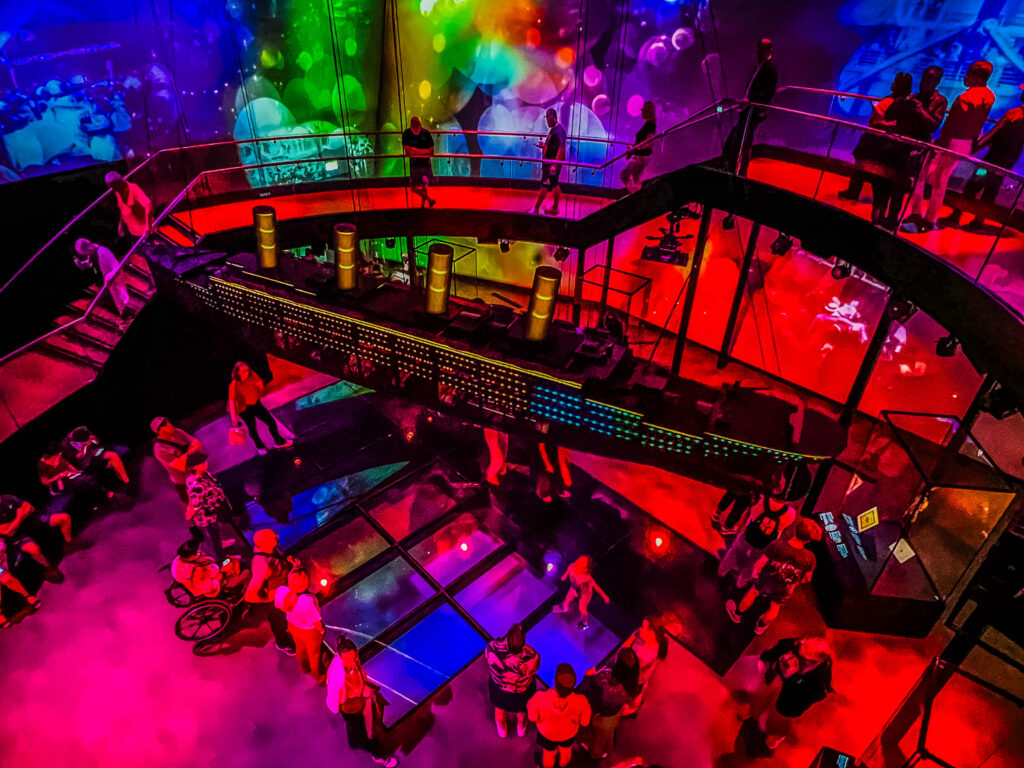
- Aftermath: This is filled with survivor accounts and news reports from around the world.
- Myths & Legends: Learn how the Titanic’s story has been remembered.
- Titanic Beneath: This is an interesting presentation of the story of underwater exploration, including video of Robert Ballard’s 1985 discovery of the wreck.
Allow about 3 to 4 hours to explore all the galleries. If your time is tight, choose the galleries that interest you most. The spacious atrium includes a cafeteria and a gift shop.
The Gaeltacht Quarter (West Belfast)
Found along Falls Road in West Belfast, these streets are tied to Belfast’s history called The Troubles. From 1968 to 1998, two groups of Irish, basically the Protestants and the Catholics, fought either to continue British rule or become independent.
Violence erupted throughout those times. Ordinary life was shaped by checkpoints, bombings, and paramilitary groups. The Irish Republican Army (IRA) headquartered here. The British Army was here, too.
Today, Peace Walls separate the two factions. A security gate between them is still locked at night.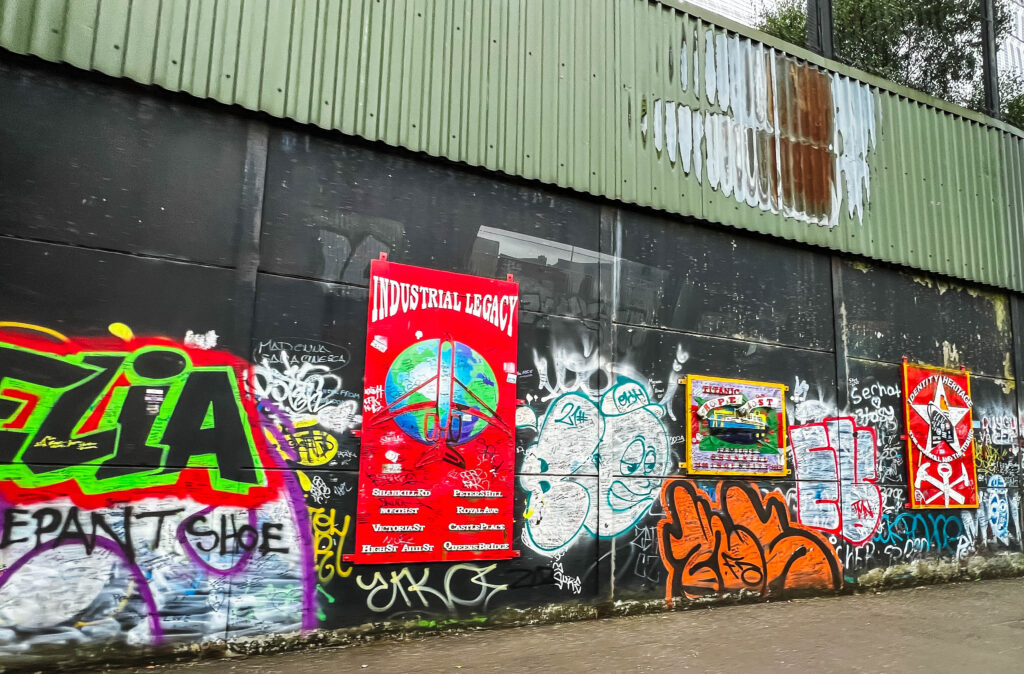
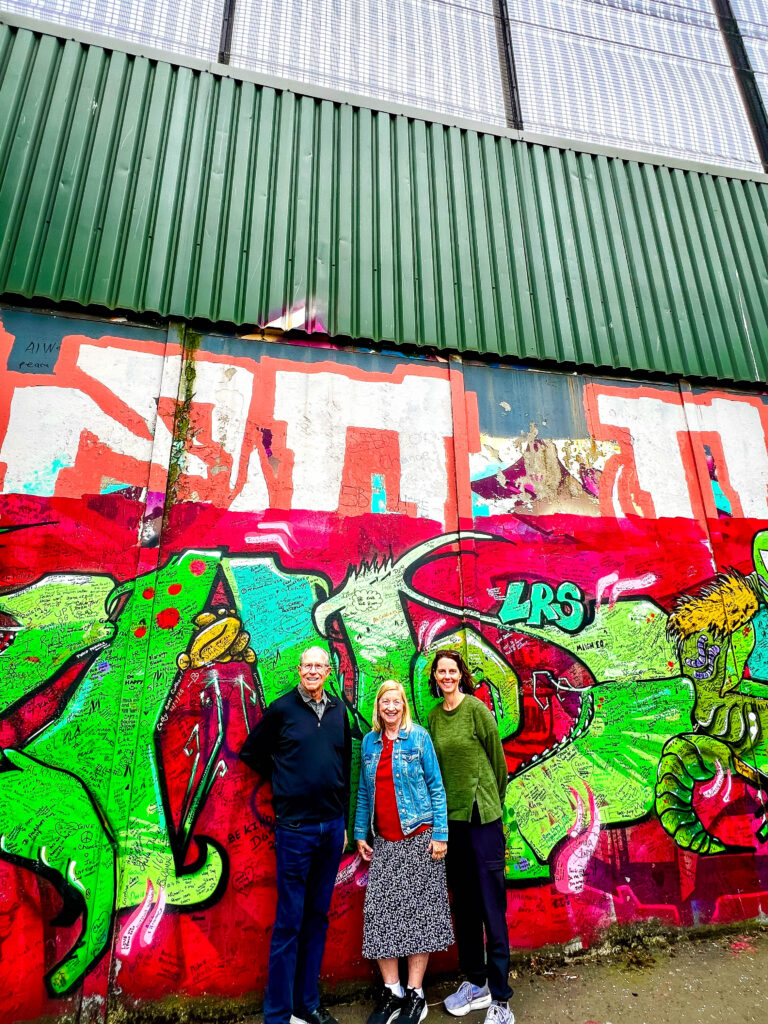
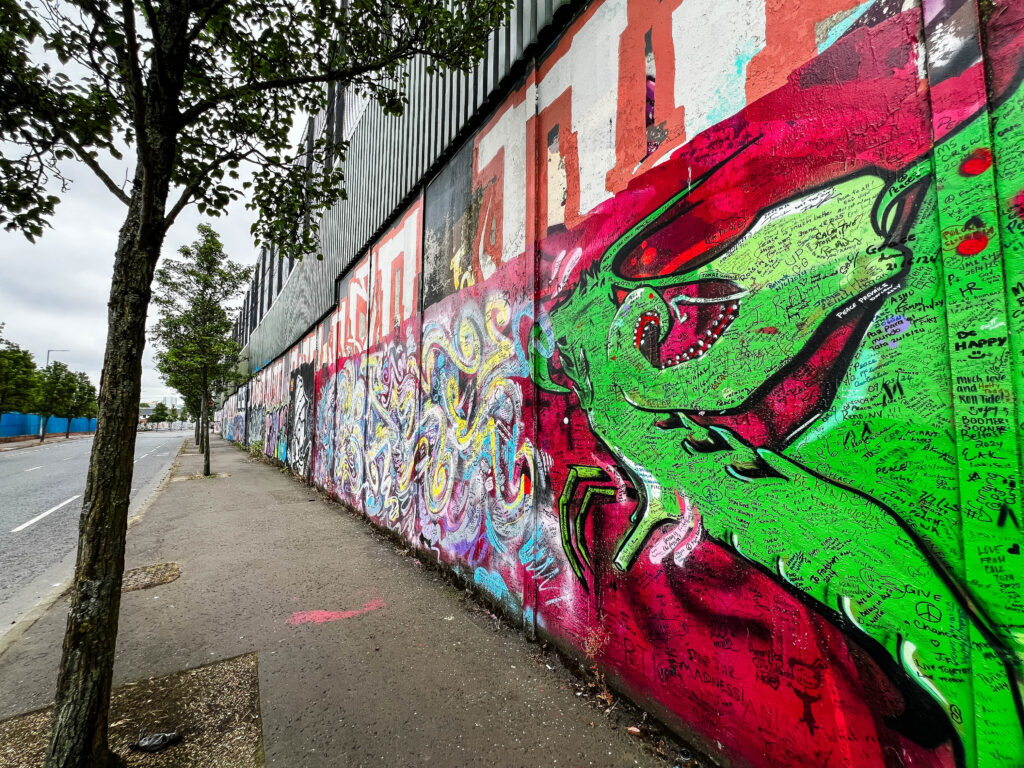
Large murals depicting scenes and people from The Troubles decorate the walls. Tensions still rumble under the surface.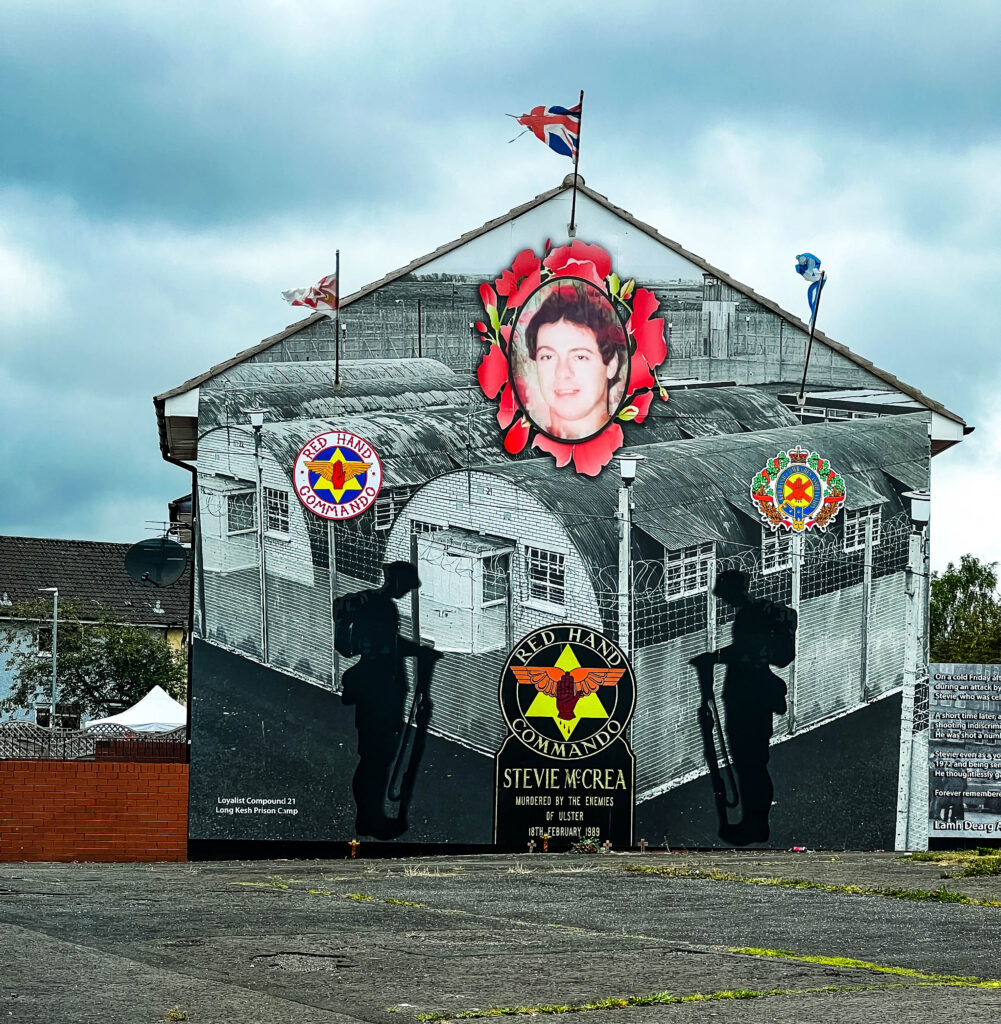

The Women’s Quilt mural is a favorite of mine. Isn’t it beautiful?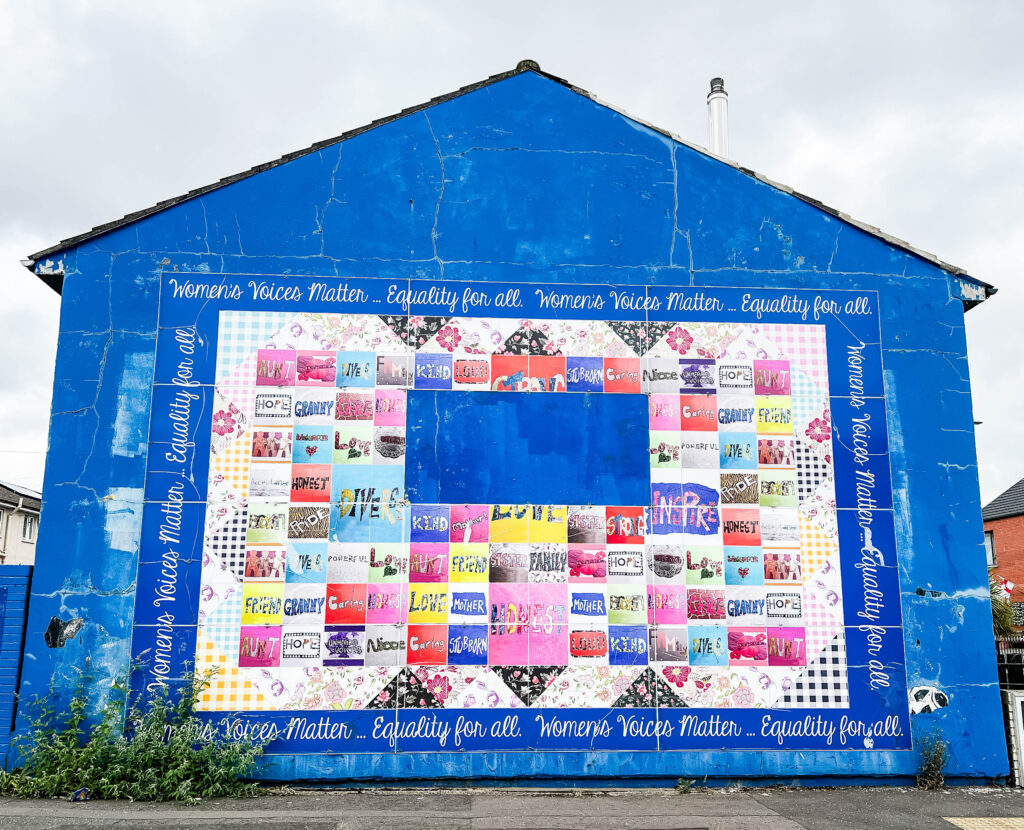
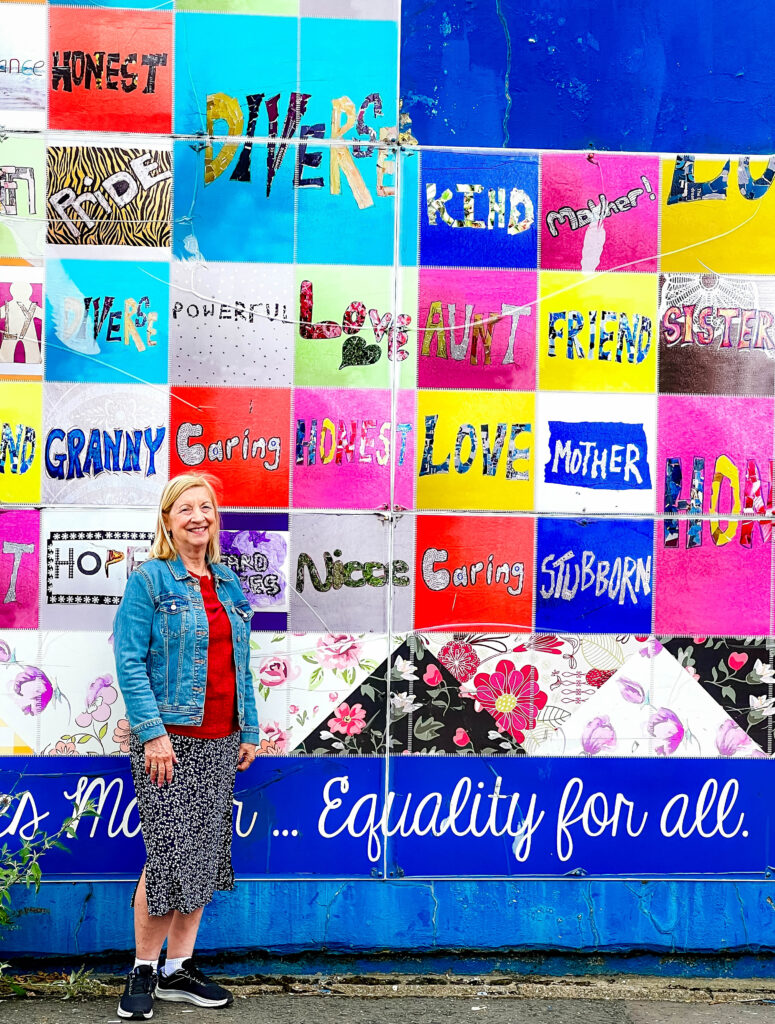
A visit to this area is deeply moving. Besides murals, flags, walls, and fences, you will see a lovely memorial garden dedicated to those killed during The Troubles.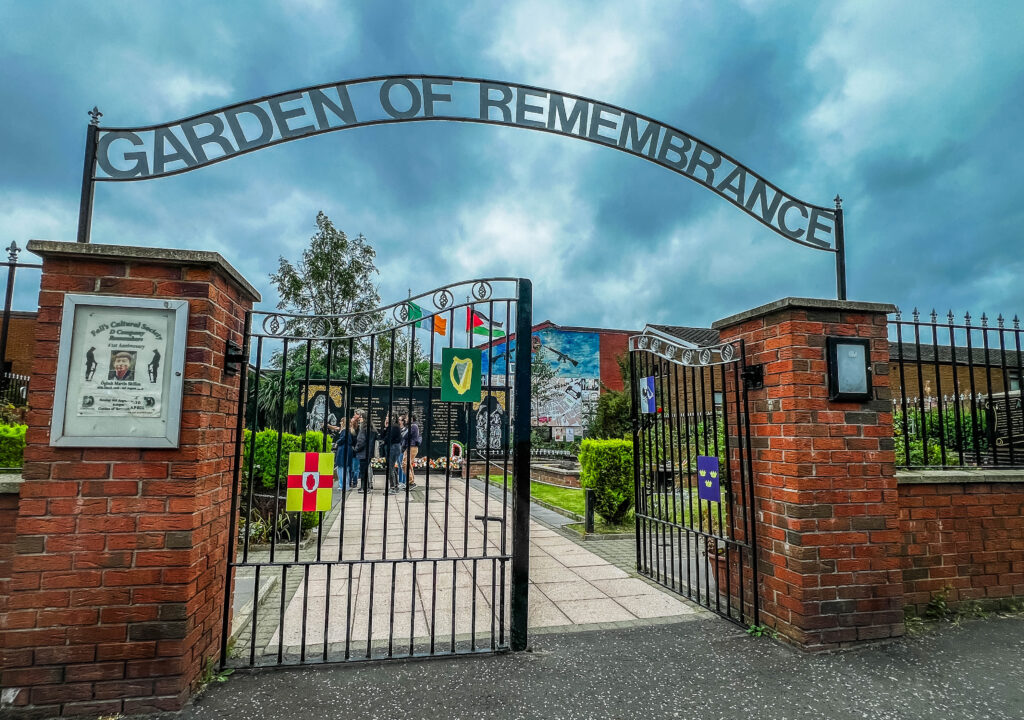
I recommend a Black Cab tour of this area. The “black cabs” are approved and known by the locals. The driver is an excellent tour guide who will explain the context and symbolism of the murals. And your guide can tell you about the streets, the history, and the current situation.
A visit to this area of Belfast is an experience in living history. The Troubles officially ended with the Good Friday Agreement (1998). But the murals and Peace Walls remind you that this very recent history still shapes Irish communities.
Read this journalist’s recent book on The Troubles for excellent insight into this time in Ireland’s history: Say Nothing: A True Story of Murder and Mayhem in Northern Ireland by Patrick Radden Keefe
Book the Black Cab tour of Belfast by Get Your Guide.
The Queen’s Quarter
Want a chance to relax, breathe in beauty, and amble at your leisure? Head to the Queen’s Quarter. Here you’ll find one of the treasures of Northern Ireland: Queen’s University. Known for its appealing architecture and history, you will enjoy spending a few hours on this campus.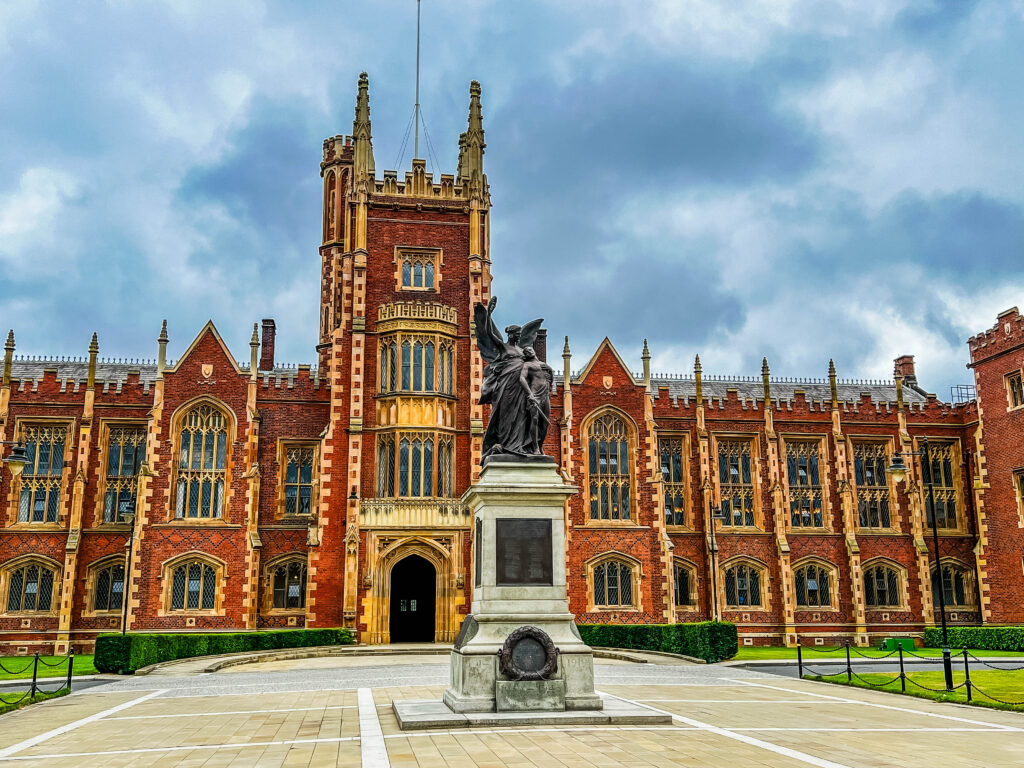
Opened in 1845, Queen’s University quickly became an education leader in science, medicine, law, and the liberal arts. Nobel laureates and poets (notably Seamus Heaney) studied here. The campus is not only an academic center, but it also includes theaters, art exhibitions, and concert venues.
Why you will want to visit Queen’s University
First, as you enter the campus, you will take in the imposing red brick buildings. Center front is the Lanyon Building, named after its architect. The Tudor Gothic Revival style uses sandstone dressings on brick and ornate stone tracery windows. Look for a central tower and turreted corners.
A must-see at Queen’s is the beautiful Botanic Gardens, one of the most unique things about the school. First established in 1828, the gardens have been enjoyed as a public park by the people of Belfast since 1895. There is an extensive rose garden and long, herbaceous borders and oak trees.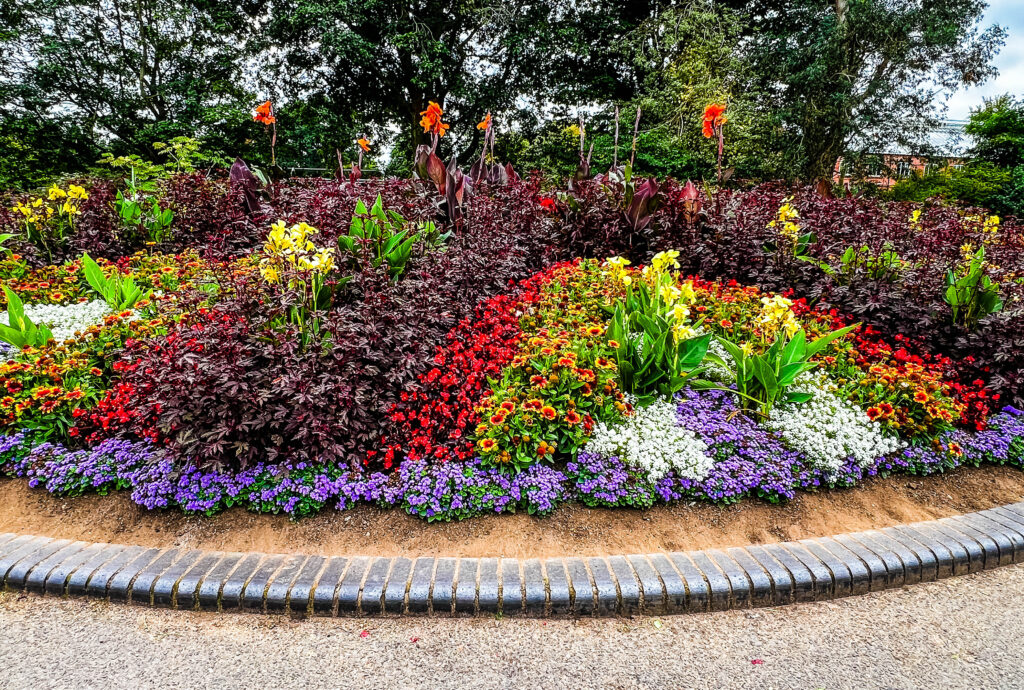
The jewel in this crown is the 150-year-old Victorian Palm House. While the botanical offerings inside will amaze you, it’s the white wrought iron, curving building that will delight you the most.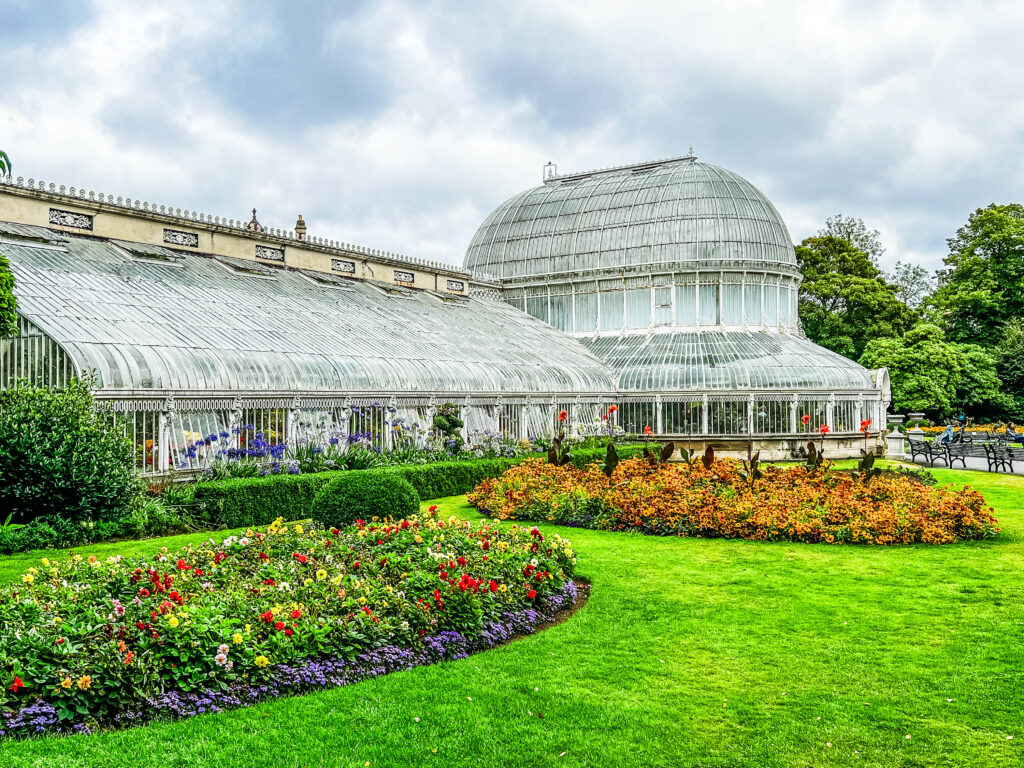
The Tropical Ravine near the gardens is a wonder. It’s filled with palms and other plants. Some date back over 200 years.
Then there’s the wonderful Ulster Museum. You can immerse yourself in Irish history here. Even an hour spent here is eye-opening.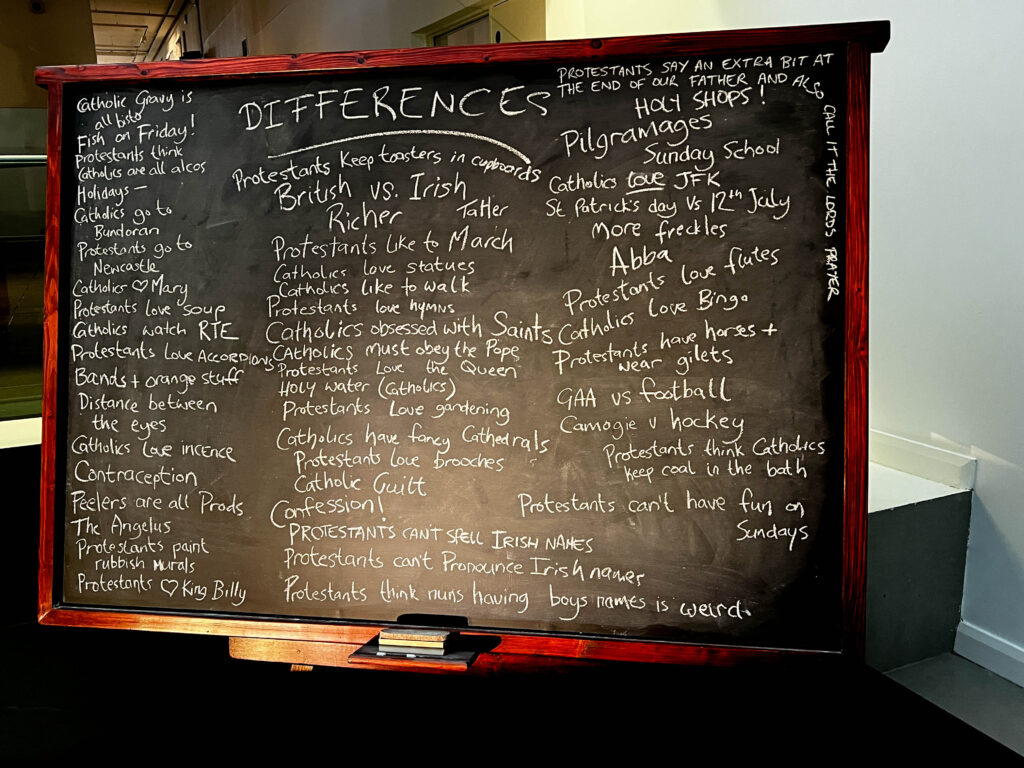
My favorite exhibit was a deep dive on The Troubles.
The traumatic events of the years after 1968 touched almost everyone who lived in Ulster and many others from further afield. Views on The Troubles are contested in terms of their significance, meaning, and responsibility. Memories of those who lived through this time vary. The presentations in the Ulster Museum will enlighten visitors to the complicated history of The Troubles.
If hunger strikes as you stroll the campus, you can grab a quick and delicious lunch at the cafeteria in the Ulster Museum.
The Linen Quarter
This lively, revitalized area of Belfast is where I stayed, and I loved it. Once the hub of Belfast’s linen industry in the 19th century, today the Linen Quarter is known as a hospitality and entertainment district. Streets are filled with hotels and eateries. Historic architecture houses modern businesses. A wander through the Linen Quarter will have you gasping with delight at the varied sights. Take a look at the Opera House!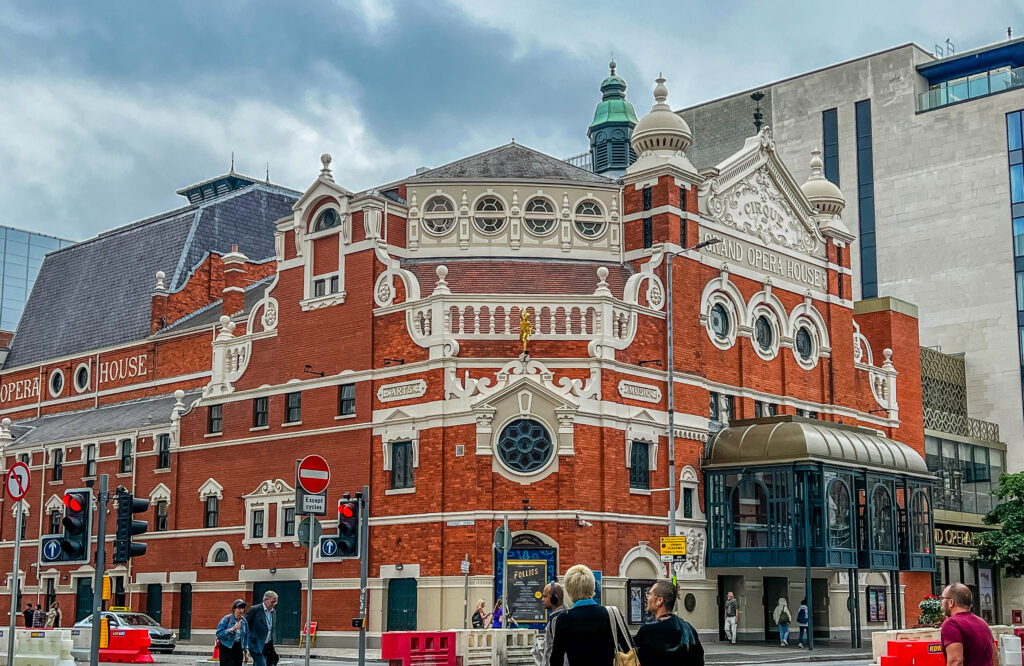
Most famous is the Crown Bar, officially named the Crown Liquor Saloon. It’s not just a place to drink, but a living museum of a bygone era, bridging Belfast’s past and present. Opened in 1880, the bar has gone by different names and was restored to its original glory in 2007. It’s now owned by the National Trust. The detail, craftsmanship, and preservation of the interior make it a rare surviving example of Victorian pub art and design.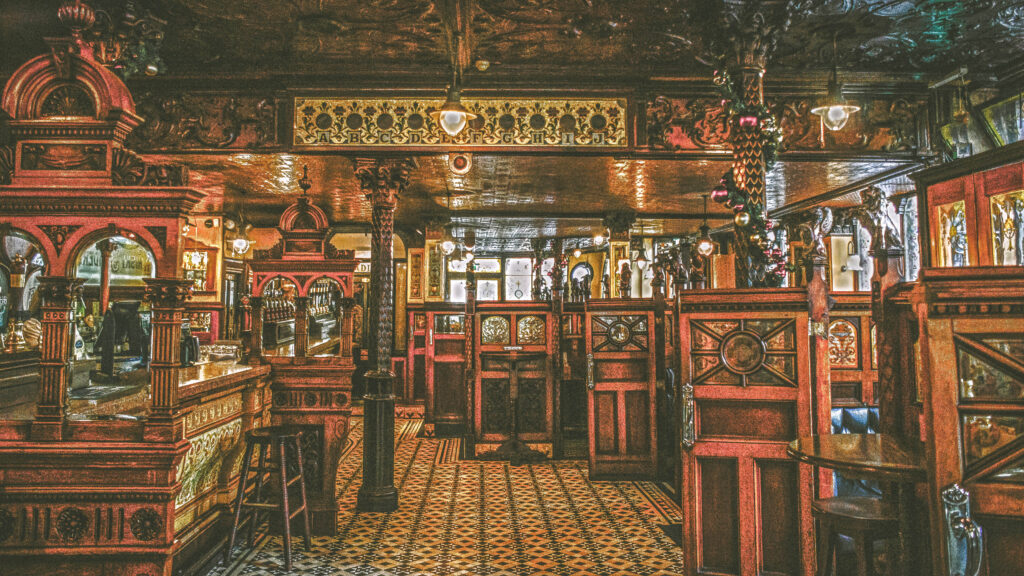 The bustling bar is known for its private booths called “snugs.” The website describes the bar perfectly: “The long, red granite topped altar style bar takes center stage, with its huge casks and polished brass taps. The mosaic tiled floor and decorative carved ceiling are truly eye-catching. The stained-glass windows are etched with fairies, pineapples, fleur-de-lys, and clowns. They don’t build pubs like this anymore.”
I was so excited to get reservations and enjoy dinner here. Climb the narrow stairway to the upstairs sit-down restaurant and take in the gleaming dark wood, servers scrambling to keep up with people clamoring for more beer on tap, and delicious food.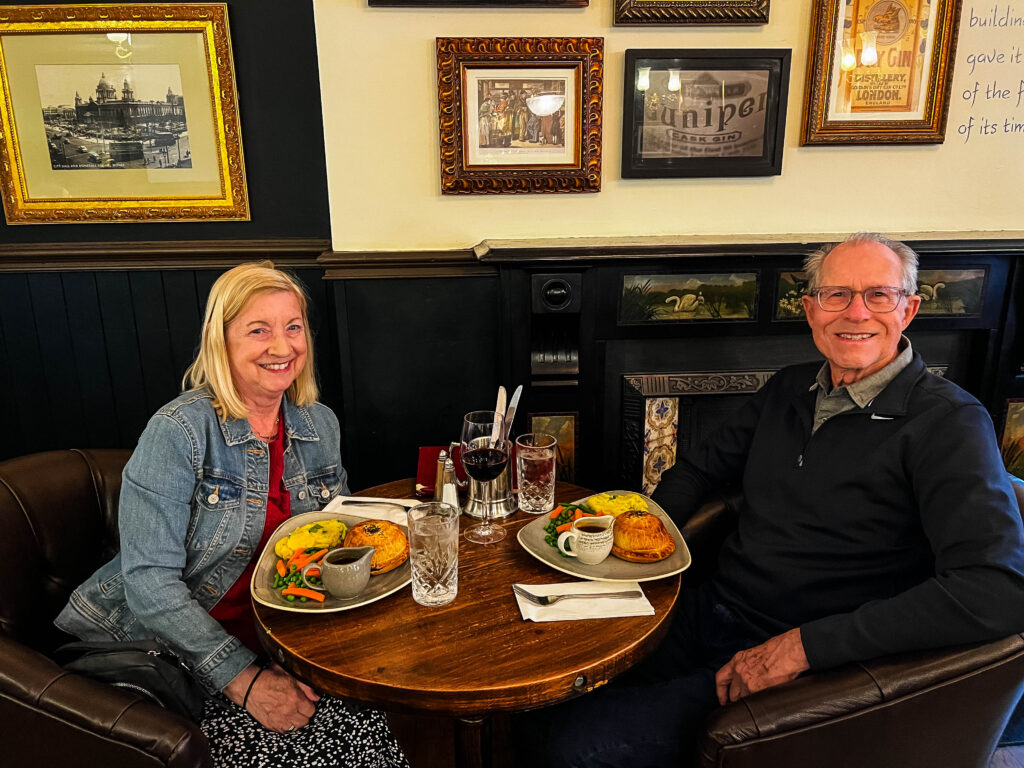
And on your way in, look for the tile mosaic of a lovely crown at the front door.
Belfast City Hall is a central feature of the Linen Quarter. It’s located at Donegall Square in the heart of the city, where several of Belfast’s cultural quarters meet. Opened in 1906, City Hall includes many ornate features: domes, towers, stained glass, and marble.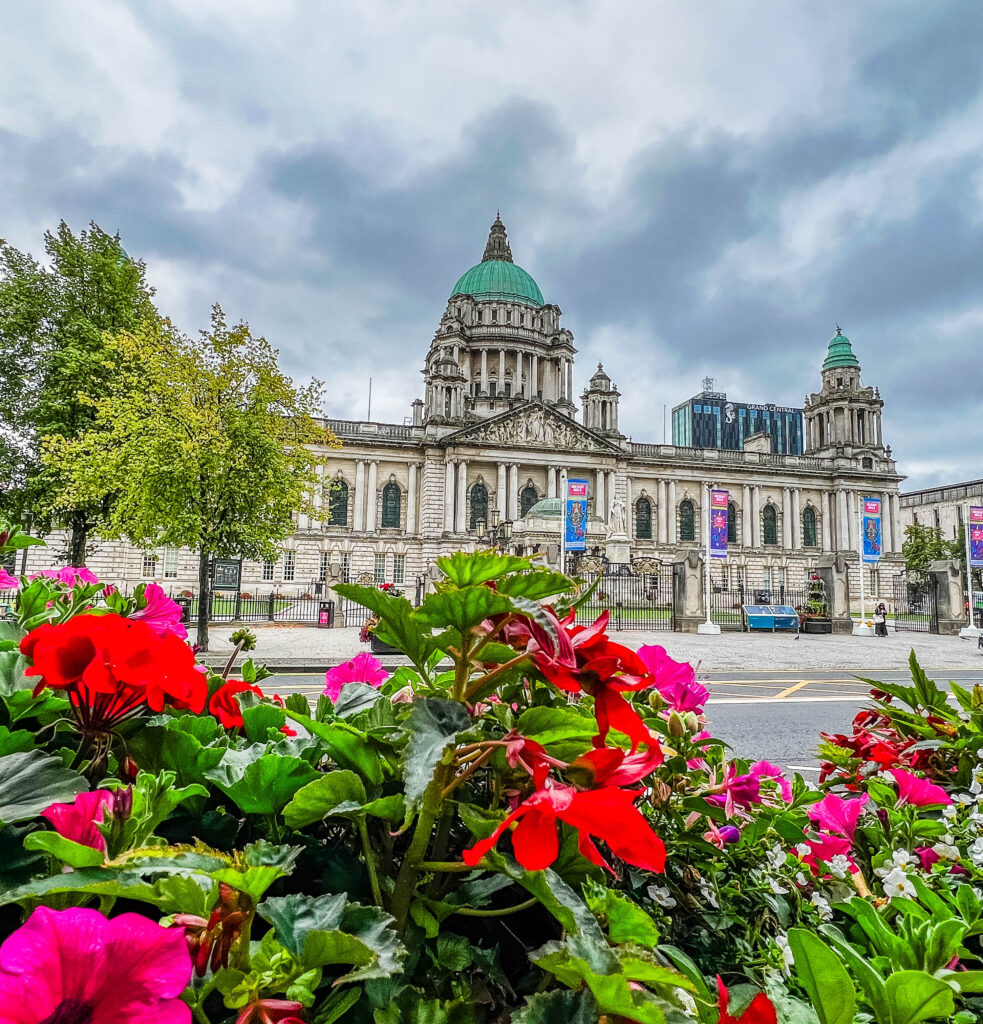
The displays of stained glass caught my eye. They commemorate events, people, and causes. My favorite was the beautiful depiction of the Famine (1845 to 1852).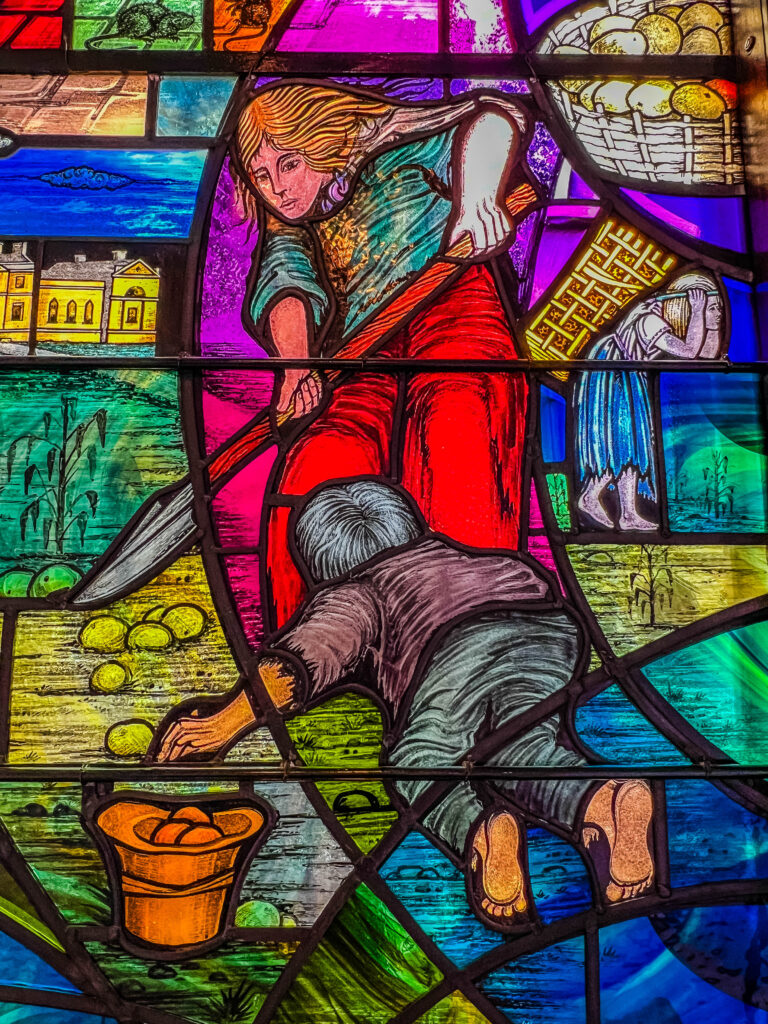
The prominent statue in front of Belfast City Hall is of Queen Victoria, who granted Belfast city status in 1888.
The Cathedral Quarter
Just inland from the Titanic Quarter and adjacent to the Linen Quarter, the Cathedral Quarter takes its name from St. Anne’s Cathedral. This area is known for being Belfast’s creative and cultural heart. It boasts art galleries, music venues, restaurants, and trendy bars. If you’re looking for buzzing nightlife, this is the place.
The beauty of this quarter is in its lanes and intriguing side alleys. Let yourself get a bit lost and you’ll find interesting pubs, cafés, murals, hidden doors, and atmospheric corners throughout.
Where to stay in Belfast
I recommend staying in the center of the city, which is (roughly) in the Linen Quarter. This allows you to get to any areas of Belfast by walking or taking a short taxi ride. For me, part of the pleasure of travel is walking in the early morning in a city and taking in everyday life there. People are heading to work, coffee shops and restaurants are opening, residents are out walking their dogs or taking children to school. You can immerse yourself in the culture.
The hotel I stayed at, the Maldron, is perfectly situated. It’s around the corner from the Crown Pub. It’s near the Opera House. It’s a couple of blocks from the central downtown streets. It’s new and comfortable, with all the modern conveniences. The buffet breakfast is extensive and delicious. With a bar in the lobby and so many pubs and restaurants nearby, you will be sure to enjoy your stay.
Where to eat in Belfast
It’s a bit of a secret, but if you are in Northern Ireland very long, you realize that the food here is remarkably delicious. Talking with locals, I learned that this has been something notable in the last couple of decades. You will have an easy time finding a scrumptious meal! Here are a few suggestions:
Crown Liquor Saloon (Crown Bar)
This treasure in the Linen Quarter is a lively way to travel back in time while savoring your dinner. As mentioned, this pub has quite a history. And it’s been restored to capture the gleaming wood and stained-glass windows of the original. I chose the chicken pot pie (with peas of course) and it was amazing.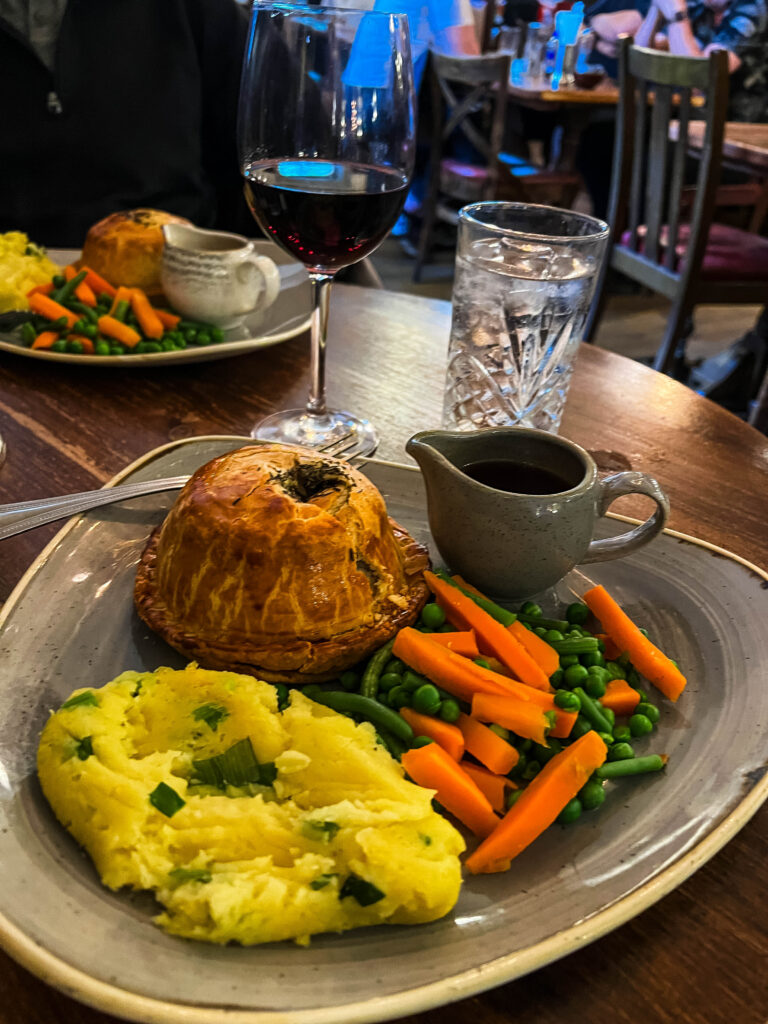
Reservations are recommended. I missed out on the first try. But I made reservations for the following evening and that worked out well,
Robinson’s Bars
This establishment is five venues in one building. If you go for dinner, make your way upstairs to the “Pool Room.” If you come later for music, that venue is downstairs.
The restaurant serves a wonderful plate of fish and chips. The atmosphere is comfortable, the service was impeccable. And the restaurant is next door to the Crown Pub. If you can’t get in there, head to Robinson’s. I ended up returning here another evening just for the dessert.
James St.
This is the in place to head for dinner in the Cathedral Quarter. The menu is created around charcoal grilling. Specialties include Tyrone beef and sustainable fish dishes. On Sundays, the set menu serves what this restaurant boasts is the “best Sunday roast in Belfast” with all the trimmings. They also note that an “Irish whiskey collection takes pride of place on the bar, with the whole Bushmills collection available to taste.”
The Muddler’s Club
This Michelin Guide restaurant is an excellent choice for fine dining in the Cathedral Quarter. The Muddlers Club is named after the secret society that met there over 200 years ago. Today the restaurant focuses on modern dining in a relaxed space with an open kitchen. Menu offerings include Coronation Chicken, Wicklow Venison, and Mourne Lamb. A vegetarian menu is also available.
Book your train tickets with Rail Europe for easy and reliable service.
Rail Europe partners with more than 230 train services such as SCNF, DB, and Swiss train lines. So, you can always find the transportation you need for your trip.
Consider an organized tour
I toured Belfast (and more of Northern Ireland) with the excellent tour company Essential Ireland Tours. You’ll find a vast array of tour companies in Ireland, so it may help to know this one is amazing for several reasons. The smaller group size (no more than 16 people) meant we enjoyed plenty of conversations and interaction as we explored Ireland.
The guides on our tour grew up in Ireland, are familiar with its history and culture, and kept up a running commentary as we drove. They truly love their country and want to share all its goodness with you.
We were on our own for dinner, which gave us time to explore and choose pubs and restaurants to our liking.
We learned, we laughed, we grew to be a tight-knit little group in just a few days. Your tour guide may even serenade you as you ride along. (Ask for Londonderry Air!).
Whether you visit Belfast as a day trip or stay and soak in the rich historic atmosphere, you will be so glad you came. With such numerous places to visit in Belfast, it’s easy to find what suits your interest. And you may find new and intriguing areas of the city the more you explore. Amazing sights, centuries of history, and delicious food and drink will delight you. Sláinte! 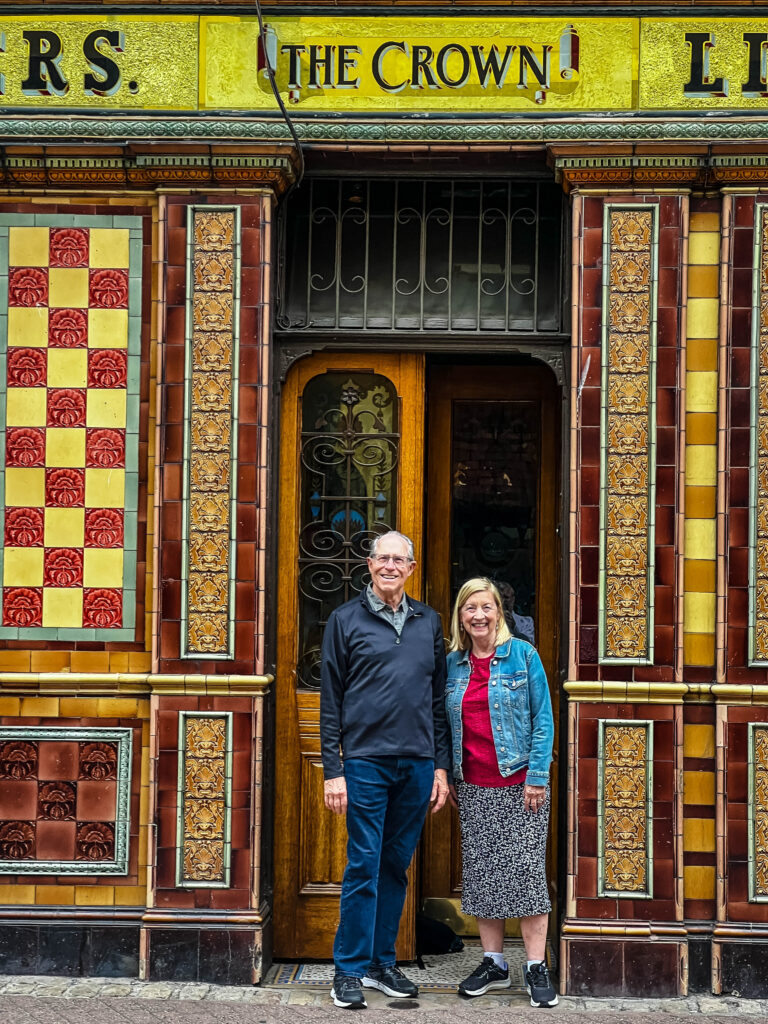

PIN IT FOR TRAVEL PLANNING!